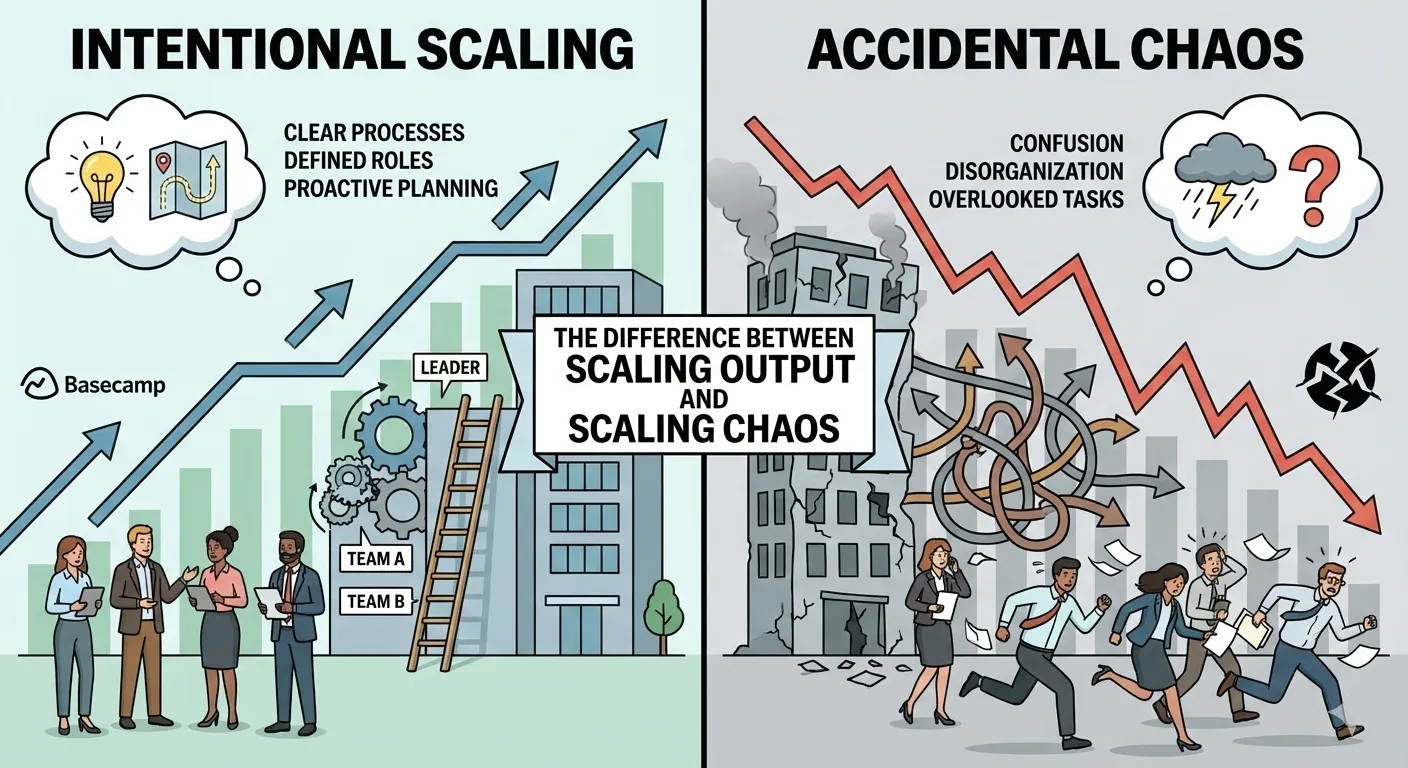

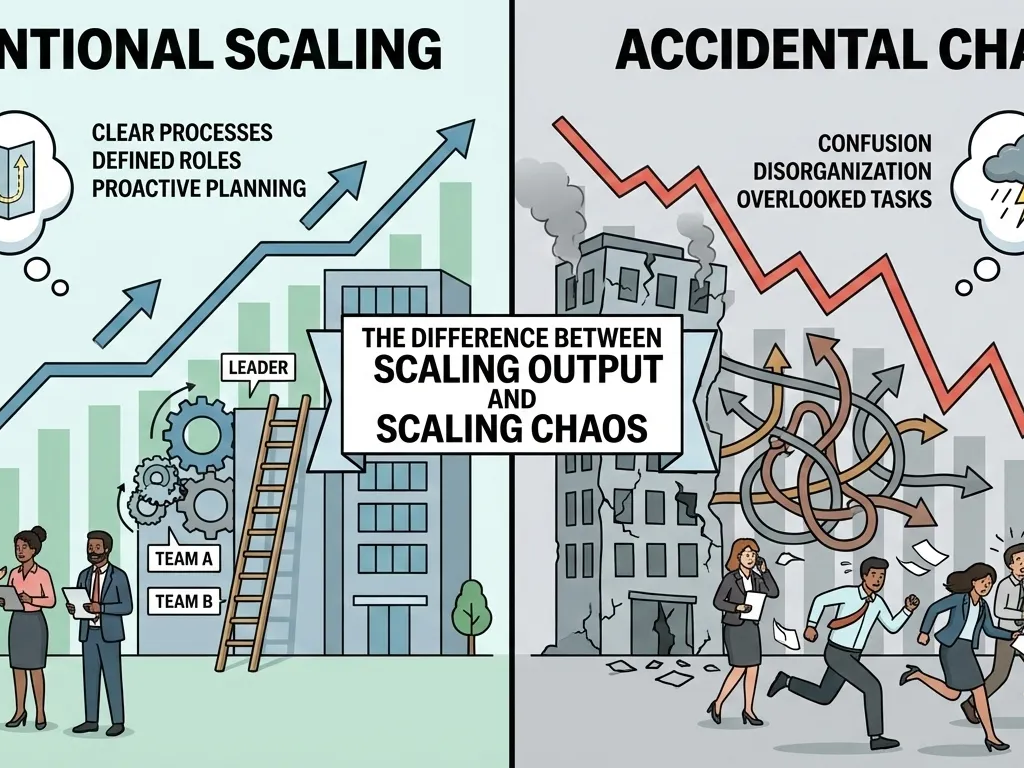
In the fast-paced world of business, understanding the difference between intentional scaling and accidental chaos is vital for sustained success. Intentional scaling focuses on crafting clear processes and roles that ensure everyone knows their responsibilities, which helps minimize confusion. This proactive approach fosters effective communication and thoughtful planning, enabling teams to adapt quickly in dynamic markets.
On the other hand, accidental chaos creeps in when growth outstrips an organization’s ability to manage it, leading to fragmented processes and chaotic work environments where critical tasks are overlooked. By implementing structured systems like those used by Basecamp, companies can scale efficiently without succumbing to chaos or quality drops.
Table of Contents
- Understanding Scaling: Output vs. Chaos
- Defining Intentional Scaling
- Recognizing Accidental Chaos
- Contrast Between Scaling Types
- Concrete Examples of Chaos in Scaling
- The Importance of Systems in Scaling
- Structure as the Difference Between Output and Chaos
- Frequently Asked Questions
Understanding Scaling
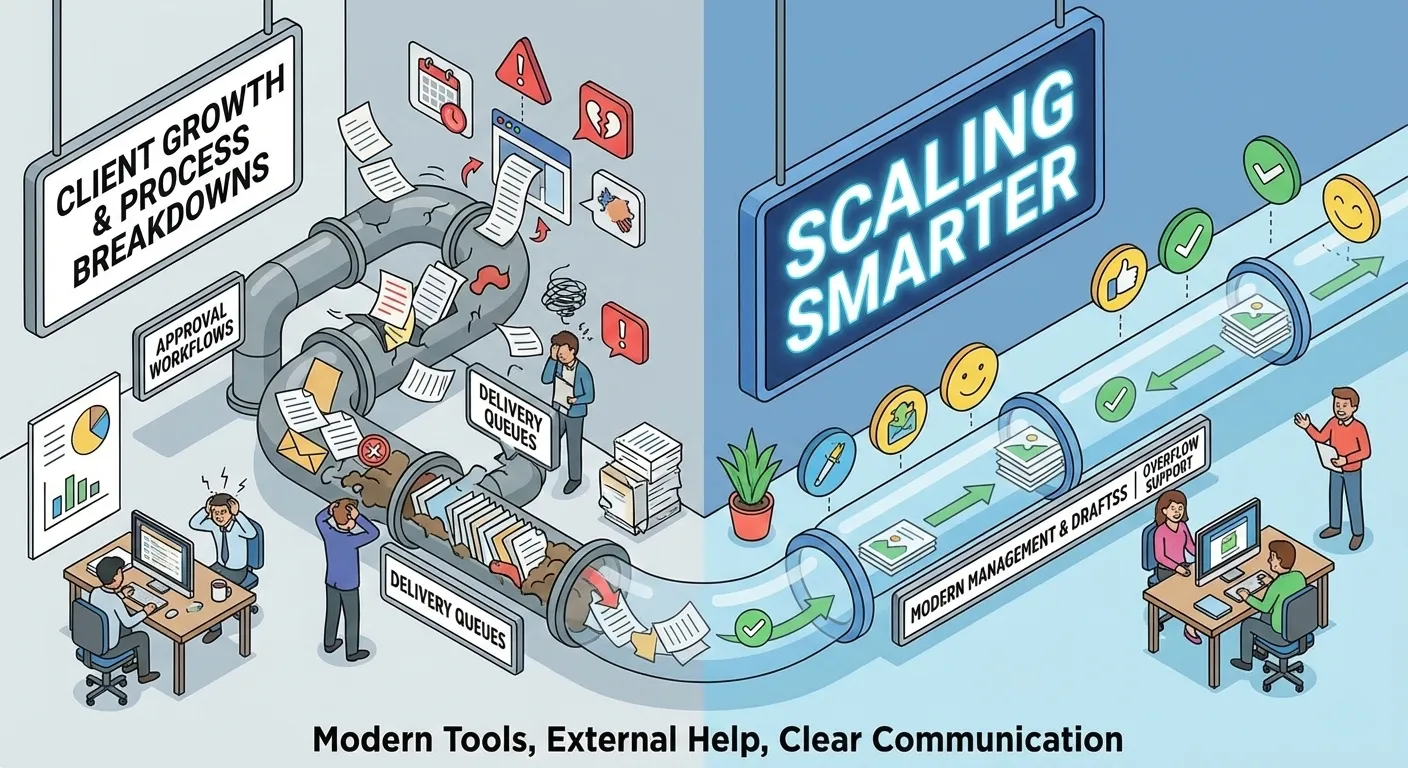
Scaling is a critical aspect of business growth, but it can manifest in two distinct ways: output-focused scaling and chaos-driven scaling. Output scaling emphasizes enhancing productivity and efficiency, ensuring that teams work cohesively towards shared goals. In contrast, chaos scaling often leads to confusion, disorganization, and missed opportunities. This chaos typically arises from rapid growth without the necessary systems and processes to support it, resulting in poor communication and teams working in silos.
When organizations focus on intentional scaling, they adopt a structured approach, defining clear roles and responsibilities. This clarity minimizes confusion and aligns everyone toward common objectives. For example, companies like Basecamp thrive by streamlining their processes, which allows them to handle growth without succumbing to chaos.
On the other hand, when chaos takes over, teams may find themselves in a reactive mode, constantly putting out fires and struggling to maintain quality. This can lead to overlooked tasks, such as performance reviews or rushed product deliveries, ultimately harming customer satisfaction.
Effective scaling requires regular assessments of existing processes to identify areas for improvement. Organizations must adopt a proactive stance, anticipating challenges rather than merely reacting to them. By distinguishing between output and chaos, companies can create a structured pathway for growth that fosters collaboration, enhances efficiency, and avoids the pitfalls of disorganization.
Defining Intentional Scaling
Intentional scaling is all about being deliberate in how a business grows. It goes beyond just adding more output; it’s about creating systems that can flexibly handle increased demand without sacrificing quality. For example, a company might define clear roles and responsibilities for each team member to ensure accountability. This helps reduce confusion and keeps everyone focused on their tasks.
Regularly reviewing strategies based on market feedback is also essential, allowing businesses to adjust their approaches as needed. Investing in training and resources for teams ensures they are well-prepared to navigate the scaling process. Effective communication at every level of the organization plays a crucial role in intentional scaling, helping to align everyone’s efforts toward shared goals.
Setting measurable objectives helps track progress and make necessary adjustments along the way. Incorporating customer feedback loops can lead to continuous improvements in products and services, which is vital for maintaining customer satisfaction. Furthermore, emphasizing the company culture and core values during scaling helps maintain a cohesive work environment, even as the organization grows. Finally, a focus on innovation and adaptability is key, as it enables companies to thrive in a dynamic market landscape.
Recognizing Accidental Chaos
Accidental chaos can sneak into organizations in various ways, often catching teams off guard. Common signs include missed deadlines and poor communication, which can stem from a lack of clarity about roles and responsibilities. When team members are unsure who is responsible for what, overlapping efforts can occur, leading to confusion and frustration. Without standardized processes, managing tasks becomes a hurdle, making it tough to keep everything running smoothly.
In chaotic environments, the focus often shifts to quick fixes rather than long-term solutions, causing problems to resurface repeatedly. This constant pressure can leave team members feeling overwhelmed and stressed, which can negatively impact morale and productivity. Chaos doesn’t just hurt internal operations; it can also lead to customer dissatisfaction due to inconsistent service or product quality.
Frequent changes in direction, especially without proper communication, can worsen the chaos, leaving teams feeling lost. In such an environment, employees may disengage when they feel their contributions go unnoticed. Organizations need to stay vigilant, recognizing the signs of chaos early on, so they can address issues before they spiral out of control. Cultivating a culture that encourages open feedback can be a powerful way to spot chaos and implement corrective measures promptly.
- Accidental chaos can manifest in various ways, such as missed deadlines and poor communication.
- It often arises when teams are unclear about their roles and responsibilities, leading to overlapping efforts.
- Organizations experiencing chaos may lack standardized processes, making it difficult to manage tasks effectively.
- In chaotic environments, quick fixes are prioritized over long-term solutions, causing recurring issues.
- Team members often feel overwhelmed and stressed, impacting morale and productivity negatively.
- Accidental chaos can lead to customer dissatisfaction due to inconsistent service or product quality.
- Frequent changes in direction without proper communication can exacerbate chaos within teams.
- Employees may become disengaged when they feel their contributions are not recognized amidst chaos.
- Organizations must be vigilant in identifying signs of chaos to address issues before they escalate.
- A culture that encourages open feedback can help organizations spot chaos early and implement corrective measures.
Contrast Between Scaling Types
When we explore the realms of Intentional scaling and accidental chaos, the differences become strikingly clear. Intentional scaling is all about being proactive and structured. Organizations that embrace this approach lay out a clear roadmap for growth, making sure everyone knows their roles and responsibilities. This ensures that teams work together, fostering collaboration rather than creating silos. For instance, a company that has set up clear processes for onboarding new team members will experience smoother transitions as they grow, keeping everyone aligned and focused.
In stark contrast, accidental chaos tends to emerge when growth outpaces an organization’s ability to manage it. This chaos is characterized by confusion and disorganization, where teams might overlap in their responsibilities or miss critical deadlines altogether. Imagine a situation where performance reviews slip through the cracks, this can lead to disengaged employees and a toxic work environment. Without structured metrics to define success, measuring progress becomes a daunting task, resulting in stagnation.
Intentional scaling promotes a culture of continuous improvement, while chaos often results in setbacks. Organizations that prioritize intentional scaling invest in training and development for their employees, ensuring that skill gaps don’t hold them back. On the other hand, accidental chaos can create environments filled with stress and frustration, where last-minute decisions are the norm and clarity is a rarity. Recognizing these differences allows organizations to shift their focus toward intentional scaling, paving the way for sustainable growth and a more positive workplace culture.
| Aspect | Intentional Scaling | Accidental Chaos |
|---|---|---|
| Ownership and Accountability | Defined roles ensure clarity and reduce confusion. | Lack of clear ownership leads to duplicated efforts. |
| Processes | Structured systems that promote efficiency and quality. | Inconsistent processes create confusion and inefficiencies. |
| Planning | Proactive planning with long-term strategies. | Reactive approach often focused on immediate fixes. |
| Collaboration | Encourages teamwork and shared goals. | Siloed teams work in isolation, leading to fragmentation. |
| Continuous Improvement | Focus on metrics to gauge success and adapt. | Difficulty in measuring progress due to chaos. |
| Culture | Fosters a positive environment supportive of growth. | Creates stress and disengagement among employees. |
Concrete Examples of Chaos in Scaling
In chaotic scaling, the neglect of essential tasks can lead to significant issues. For instance, without regular performance reviews, employees may feel undervalued and disengaged, which can hurt team morale. Imagine a scenario where product deliveries are rushed due to a lack of established systems. This can damage relationships with customers, as they begin to lose trust in the brand. Quality control can also take a hit; in an environment where everything is moving too fast, products may be poorly made, leading to increased returns and customer complaints.
Moreover, teams often miss critical deadlines because of unclear priorities and a lack of coordination among departments. When customer onboarding processes are inconsistent, new clients can feel confused and dissatisfied, impacting the overall brand experience. Resources tend to get misallocated as well, leading to wasted time and effort that could have been better utilized.
Frequent changes in leadership or strategy can create an atmosphere of uncertainty, leaving employees feeling overwhelmed and less engaged. Communication breakdowns can cause duplicated work, leading to frustration and a sense of chaos. As a result, employee turnover may increase, with staff feeling unsupported during growth phases. Regular audits and feedback mechanisms can help identify and address these chaotic elements before they escalate, ensuring that scaling efforts remain effective and organized.
The Importance of Systems in Scaling
Robust systems are the backbone of effective growth in any organization. They create a solid framework that allows businesses to manage increasing demands without losing control. With structured processes in place, everyone knows their roles and responsibilities, which significantly reduces the risk of chaos. Many teams turn to white-label that removes bottlenecks as part of their scaling strategy, because it replaces ad-hoc execution with predictable workflows, clear ownership, and consistent output. For instance, when teams have clear procedures to follow, they can operate smoothly, even during busy times.
Implementing technology solutions is another game-changer. These tools streamline workflows and enhance communication across teams, making collaboration seamless. Regular assessments of these systems help organizations adapt to changing demands efficiently, ensuring that operations remain agile and responsive.
Moreover, well-defined processes are crucial for maintaining quality as production scales up. When procedures are documented clearly, consistency in operations is achieved, which aids in training new employees effectively. A strong leadership structure supports collaboration and decision-making, preventing bottlenecks that can stall growth.
In addition, systems that promote feedback loops allow organizations to quickly identify and address areas for improvement. This creates a culture of continuous improvement, where processes are regularly refined to enhance efficiency. Ultimately, a robust system supports intentional scaling, enabling organizations to grow sustainably while avoiding the pitfalls of chaos.
Structure as the Difference Between Output and Chaos
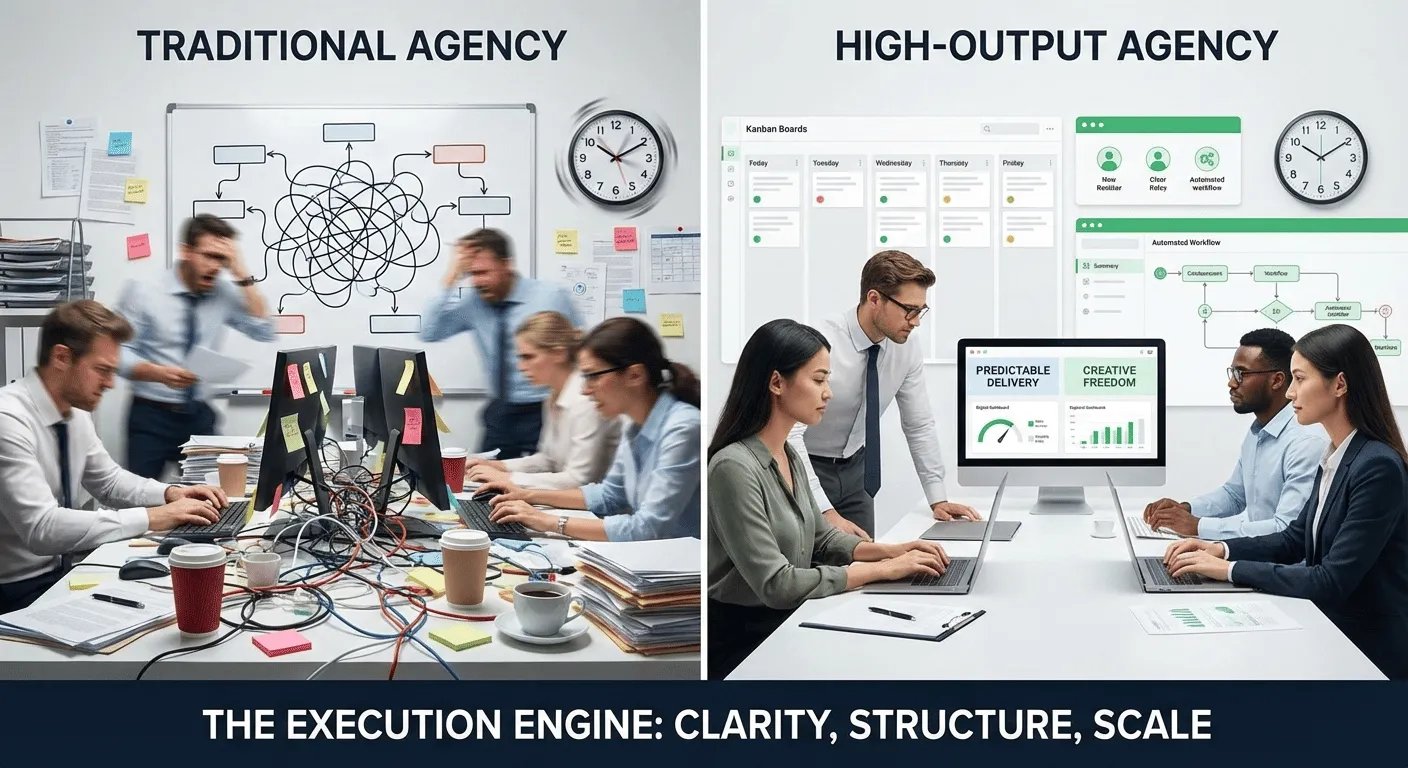
As organizations grow, the primary challenge is rarely demand—it is coordination. Without clear structure, increased output often leads to fragmented ownership, inconsistent quality, and rising operational friction. Draftss offers an example of how structure can shape whether growth results in productive scale or organizational strain.
A central feature of this approach is the use of clearly defined processes and responsibilities. Rather than relying on informal communication, work is routed through established workflows that clarify who owns what and when. This reduces ambiguity as volume increases and helps teams maintain momentum without constant intervention.
Planning plays a stabilizing role in this model. Capacity is treated as something to be managed deliberately rather than reactively, which allows teams to anticipate constraints before they disrupt delivery. Shared tools and standardized execution frameworks support alignment across contributors, even as the number of moving parts grows.
Importantly, quality control is embedded into the workflow instead of being addressed after issues emerge. Regular review of processes helps surface inefficiencies early, preventing small breakdowns from compounding at scale. This creates a system where output can increase without triggering proportional increases in rework or confusion.
The contrast between scaling output and scaling chaos often comes down to operational discipline. Growth amplifies whatever systems already exist. In this context, Draftss illustrates how structure, not speed alone, determines whether scaling leads to sustainable execution or escalating complexity.
Frequently Asked Questions
What is scaling chaos and how does it differ from scaling output?
Scaling chaos refers to a situation where, as a business grows, it becomes disorganized and inefficient. Instead of building a structured approach, it often leads to confusion and mistakes, unlike scaling output which focuses on growth with order.
Why is it important to know the difference between scaling output and scaling chaos?
Understanding the difference helps businesses grow effectively. By focusing on scaling output, companies can expand their success, while avoiding the pitfalls of chaos that can hamper progress and cause setbacks.
How can businesses avoid falling into the trap of scaling chaos?
To avoid scaling chaos, businesses should implement clear processes, set goals, and encourage communication. Planning ahead can help maintain order as a company grows.
Can scaling output lead to scaling chaos if not managed properly?
Yes, if scaling output is not managed well, it can lead to chaos. Without proper systems and oversight, fast growth may result in mistakes, confusion, and reduced efficiency.
TL;DR Growth does not create order. It magnifies the system already in place.
When organizations scale output intentionally, they scale structure at the same time. Clear ownership, defined workflows, and reliable execution systems allow volume to increase without adding confusion. Work moves faster while coordination stays stable.
When organizations scale without structure, they scale chaos instead. Roles blur, communication fragments, quality declines, and teams spend more time correcting errors than producing results. More activity does not translate into more progress.
The real difference between scaling output and scaling chaos is operational design. Companies that rely on structured delivery systems can increase capacity, maintain consistency, and grow without multiplying friction.
That is the line between sustainable scale and organizational strain.