




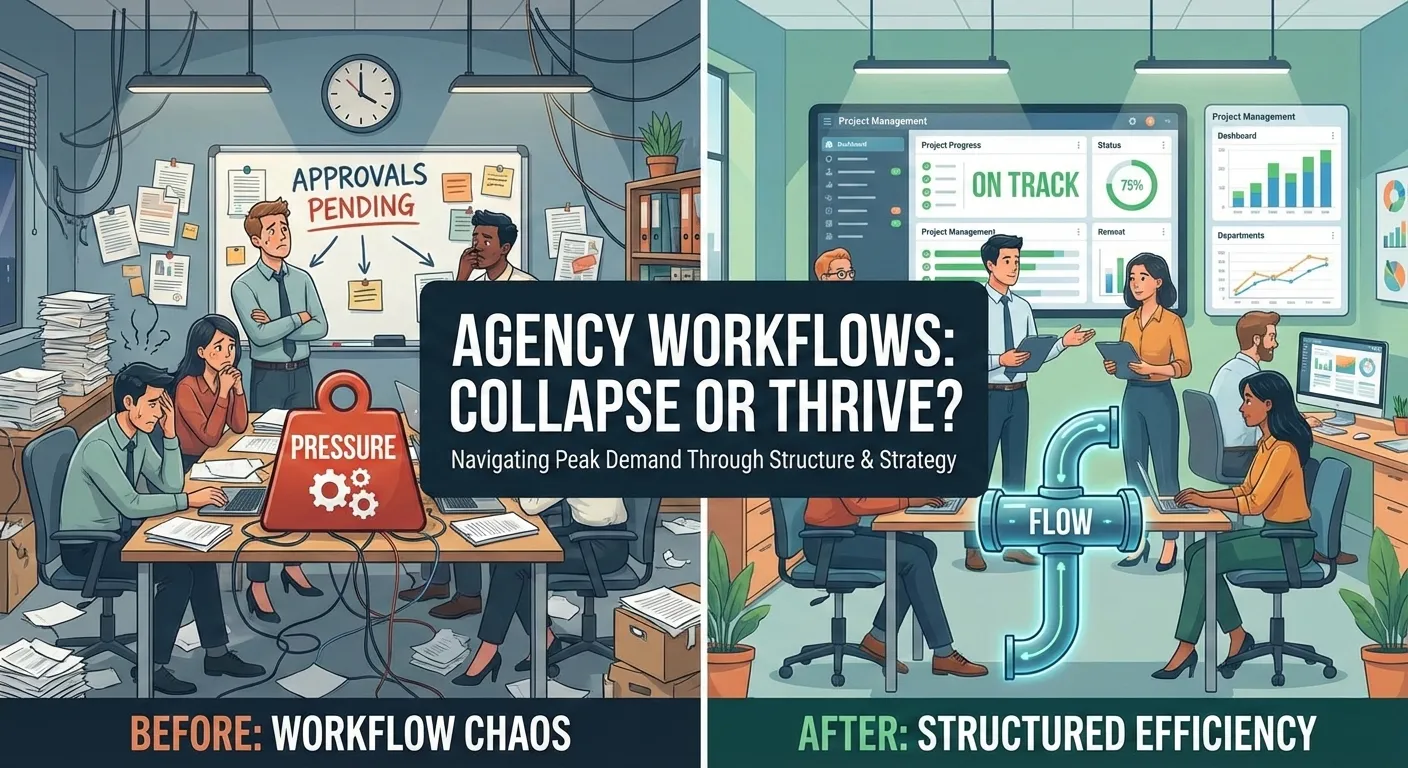
Agency workflows often buckle under the weight of pressure during peak times, leading to significant operational failures. One major issue is inefficient feedback and approval processes, which can consume up to 40% of creative time. When roles are unclear, handoffs become messy and projects suffer from delays or duplicated efforts. Creative leads face overwhelming workloads that can lead to burnout and a drop in quality.
Moreover, disorganized asset management wastes precious time searching for files. To combat these challenges, agencies should embrace structured workflows, centralized communication tools, and effective resource allocation strategies that enhance collaboration while meeting rising client expectations head-on.
Table of Contents
- Understanding Workflow Breakdown During Peak Demand
- The Chaos of Feedback and Approval Processes
- Bridging Handoffs and Communication Gaps
- The Burden on Creative Leads
- The Pitfalls of Scattered Asset Management
- Standardizing Processes for Improved Efficiency
- Meeting Increased Client Expectations
- Using White-Label Execution as a Stabilizer
- Frequently Asked Questions
Understanding Workflow Breakdown During Peak Demand

During peak demand, agency workflows can easily unravel. Increased project volumes often overwhelm teams, leading to stressed deadlines and frayed nerves. For instance, when multiple clients have urgent needs, team members might feel the crunch, which can cause projects to fall behind. Additionally, complex project requirements can create a maze of confusion, making it hard for everyone to stay aligned. Without clear roles or a solid plan for unexpected challenges, stress levels can skyrocket.
Ineffective time management only adds to the chaos, as team members scramble to meet deadlines, often sacrificing quality in the process. Shortcuts taken under pressure can compromise project integrity, resulting in rework that eats into already tight schedules. Technology can be a double-edged sword too; limitations in communication tools can hinder collaboration, especially when teams are spread across different time zones.
Moreover, when the pressure mounts, team morale tends to dip, leading to decreased productivity and a cycle of stress that can seem unending. The solution lies in regular debriefs after peak periods to identify pain points, paving the way for improved workflows in the future.
- Increased volume of projects during peak times leads to overwhelmed teams and slipping deadlines.
- Complex project requirements can create confusion and misalignment among team members.
- Lack of contingency plans can exacerbate stress when unexpected challenges arise.
- Ineffective time management practices contribute to workflow disruptions.
- As teams scramble to meet deadlines, quality often suffers, resulting in rework.
- Technology limitations can hinder communication and collaboration during peak times.
- The pressure to deliver quickly can lead to shortcuts that compromise project integrity.
- Overseas partnerships may introduce time zone challenges that further complicate workflows.
- Team morale can dip when facing consistent high-pressure scenarios, affecting overall productivity.
- Regular debriefs after peak periods can help identify pain points and improve future workflows.
The Chaos of Feedback and Approval Processes
The feedback and approval processes in agencies can often seem like a whirlwind of confusion. Inconsistent feedback from clients not only leads to frustration but also results in wasted efforts by the team. Imagine working tirelessly on a project, only to find out that the client has a completely different vision in mind. This misalignment can derail even the most well-planned projects. Adding to the chaos, multiple stakeholders providing feedback can create conflicting directions, leaving the team in a state of limbo, unsure of which path to take.
Approval bottlenecks exacerbate the situation. When decision-makers are unavailable or indecisive, projects can come to a standstill, causing deadlines to be missed and morale to plummet. To combat these issues, agencies can implement a single point of contact for approvals, significantly streamlining the process. This clarity can cut through the noise, allowing teams to focus on their creative output instead of navigating a maze of feedback.
Additionally, automating reminders for feedback can keep projects moving forward without unnecessary delays, ensuring that everyone stays on track. Visual aids such as mockups or prototypes can also facilitate clearer discussions around feedback, making it easier for clients to articulate their ideas. Establishing deadlines for feedback not only improves accountability but also encourages timely responses, which is crucial during high-pressure phases.
Creating a feedback checklist can help ensure that all necessary points are covered efficiently. Building a culture of constructive criticism can enhance the quality of feedback received, making it a valuable tool rather than a hurdle. Regular training on feedback etiquette for clients can transform the approval process into a more effective and less stressful experience for everyone involved.
| Challenge | Impact | Solution |
|---|---|---|
| Inconsistent feedback from clients | Leads to confusion and wasted efforts | Establish a clear feedback protocol to align expectations. |
| Multiple stakeholders providing feedback | Results in conflicting directions for the team | Implement a designated point of contact for streamlined communication. |
| Approval bottlenecks due to decision-makers’ unavailability | Delays project timelines and increases stress | Introduce automated reminders to keep the process moving. |
| Lack of structured workflows | Wastes up to 40% of creative time | Develop structured approval workflows with defined roles. |
| Conflicting feedback causes team frustration | Reduces morale and efficiency | Foster a culture of constructive criticism and open dialogue. |
Bridging Handoffs and Communication Gaps
Miscommunication during handoffs can be a real project killer. When information gets lost or misinterpreted, it often leads to significant delays, frustrating team members and clients alike. To combat this, utilizing project management tools can provide much-needed visibility and clarity, ensuring that every team member is on the same page during transitions.
Establishing clear protocols for handoffs is essential. When roles and responsibilities are well-defined, confusion among team members diminishes, allowing projects to flow more smoothly. Encouraging open lines of communication, whether through regular check-ins or collaborative platforms, fosters a sense of collaboration and alignment, making it easier to address any issues that arise proactively.
Documenting each stage of a project is another key practice. It ensures that no vital information gets lost in translation and that everyone involved has access to the same data. A shared glossary of terms can also minimize misunderstandings, especially in teams that might use different jargon.
Visual workflows can simplify the handoff process, making it easier for everyone to follow along. Implementing a peer review system before final handoffs can catch potential issues early, preventing them from snowballing into larger problems. Finally, building relationships between teams enhances trust and improves communication, making it easier to navigate the complexities of agency work.
The Burden on Creative Leads
Creative leads in agencies are often the backbone of project execution, yet they frequently find themselves juggling multiple projects at once. This overwhelming workload can lead to stress and burnout, as the expectation to consistently deliver high-quality work weighs heavily on their shoulders. Without adequate support and resources, their ability to perform effectively diminishes, making it challenging to maintain creativity and productivity.
Additionally, when project scopes change frequently, the pressure intensifies, leaving creative leads scrambling to adapt. To alleviate this burden, agencies can invest in mentorship and training opportunities, empowering junior staff to share the load. Encouraging creative leads to take regular breaks can also refresh their minds and spark new ideas. Implementing flexible work hours allows them to manage their time better, leading to improved outcomes. Utilizing project tracking tools can help creative leads prioritize their tasks more effectively, ensuring they focus on what’s most important.
Moreover, recognizing and rewarding their contributions can significantly boost morale and motivation, fostering a more supportive work environment. Creating a space where creative leads feel comfortable voicing their concerns is essential for a healthy workflow, as it can lead to innovative solutions and a more cohesive team dynamic.
The Pitfalls of Scattered Asset Management
Disorganized asset management can create a whirlwind of chaos in any agency. When files and resources are scattered across multiple platforms, team members often waste precious time searching for the correct versions of assets. This not only frustrates employees but also delays project timelines. Furthermore, version control issues arise when teams unknowingly use outdated assets, leading to inconsistencies that can tarnish a brand’s image and erode client trust. Without a centralized repository, the risk of losing valuable assets increases, which can be a costly mistake.
To combat these problems, agencies should implement effective tagging and categorization systems to simplify asset retrieval. Regular audits of digital assets are essential to keep the repository organized and current, ensuring everyone has access to the right materials. Incorporating cloud storage solutions allows for easy access and sharing among team members, promoting collaboration and innovation.
Additionally, training staff on asset management best practices can significantly improve overall efficiency. Establishing a standardized naming convention for files can reduce confusion and streamline the workflow. By encouraging collaboration on asset usage, resources can be shared more effectively, leading to heightened creativity and productivity. Investing in robust asset management software can further simplify the entire process, making it easier for teams to thrive under pressure.
Standardizing Processes for Improved Efficiency
Standardizing processes within an agency can truly transform how teams operate, especially under pressure. By eliminating ambiguity, standardized workflows create a clear path for everyone involved. For example, detailed process maps help to pinpoint redundancies and highlight areas that need improvement, making it easier to streamline operations.
Utilizing checklists ensures that all necessary steps are followed consistently, which significantly reduces the chance of errors. Regularly reviewing these processes keeps agencies adaptable to changing needs, fostering an environment where efficiency in design can flourish.
Engaging team members in this standardization journey not only increases their investment in the process but also enhances adherence to established protocols. Training sessions focused on standardized procedures can further boost understanding and execution among the staff. Encouraging feedback on these processes is vital too, as it paves the way for continuous improvement and refinement.
Moreover, leveraging technology for task automation can free up valuable time, allowing team members to focus on more creative aspects of their work. Establishing clear Key Performance Indicators (KPIs) helps measure the effectiveness of these standardized processes, ensuring that everyone remains accountable and aligned with agency goals.
Meeting Increased Client Expectations
In today’s fast-paced industry, clients are raising the bar on expectations, demanding quicker turnaround times and immediate results. This pressure can create a whirlwind of stress for agencies. To navigate this, setting realistic timelines from the get-go becomes crucial, helping manage what clients can expect. Regular updates and check-ins not only build trust but also keep clients in the loop regarding project progress, easing their anxiety. Educating clients about the creative process fosters a deeper understanding, paving the way for patience when delays occur.
Having multiple communication channels, like emails, chat apps, or video calls, enhances client engagement and satisfaction, ensuring they feel valued and heard. Transparency is key; when clients have insight into project statuses, it strengthens relationships and reduces uncertainties. Establishing feedback loops allows for real-time adjustments, aligning client expectations with deliverables.
Strong relationships with clients lead to better collaboration, allowing teams to offer flexible solutions that meet evolving needs, enhancing satisfaction and loyalty. Regularly assessing client feedback is essential for agencies to stay agile, adapting to changes and maintaining high-quality service.
Using White-Label Execution as a Stabilizer
White-label execution can be a game-changer for agencies, especially during those high-pressure moments when demand surges. By tapping into white-label services, agencies can quickly scale their resources, alleviating the strain on existing staff without sacrificing quality or deadlines. This flexibility allows teams to maintain high standards while navigating the chaotic peaks of project demands.
Imagine a creative agency facing a sudden influx of client requests; instead of overwhelming their in-house talent, they can seamlessly integrate white-label solutions into their workflows. This not only boosts efficiency but also empowers the agency to focus on their core strengths, delegating routine tasks to trusted partners.
Establishing strong partnerships with reliable white-label providers is crucial, ensuring that the quality and consistency of work remain intact. Regular communication with these partners enhances collaboration and aligns project goals, making it easier to manage client expectations.
Furthermore, training white-label staff to align with the agency’s standards can significantly enhance the overall quality of deliverables. With this approach, agencies can respond to growing client demands effectively, maintaining competitive pricing while improving service delivery. Leveraging white-label execution allows agencies to thrive even under pressure, ensuring they meet client expectations without overwhelming their teams.
Frequently Asked Questions
What are common reasons for agency workflows to fail under stress?
Agency workflows often collapse under pressure due to factors like poor communication, unclear roles, or lack of planning. When teams don’t communicate effectively, tasks can fall through the cracks, causing chaos and missed deadlines.
How does team communication impact agency workflows?
Team communication is crucial. If team members don’t share updates, ideas, or concerns, projects can derail quickly. Being in sync helps avoid misunderstandings and keeps everyone aligned on their goals.
What role does workload management play in preventing workflow collapse?
Workload management helps ensure that tasks are distributed evenly among team members. If one person is overwhelmed while others have lighter loads, it can lead to burnout and decreased quality of work.
Can technology really make a difference in agency workflows?
Absolutely! Using the right tools can streamline processes, improve communication, and enhance collaboration. Tools like project management software can help track progress and keep everyone on the same page.
How can agencies prepare for high-pressure situations to keep their workflows intact?
Agencies can prepare by having backup plans in place, ensuring team members are cross-trained, and fostering a culture of flexibility and support. Being proactive creates a more resilient workflow during tough times.
TL;DR Agency workflows often collapse under pressure during peak demand due to inefficiencies in feedback and approval processes, unclear handoffs, and overloaded creative leads. Solutions include standardizing processes, centralizing asset management, and utilizing white-label execution to enhance efficiency and meet client expectations. By addressing these operational challenges, agencies can maintain quality and improve resilience during critical periods.
Drop your thoughts in the comments below.
Your email address will not be published. Required fields are marked *