




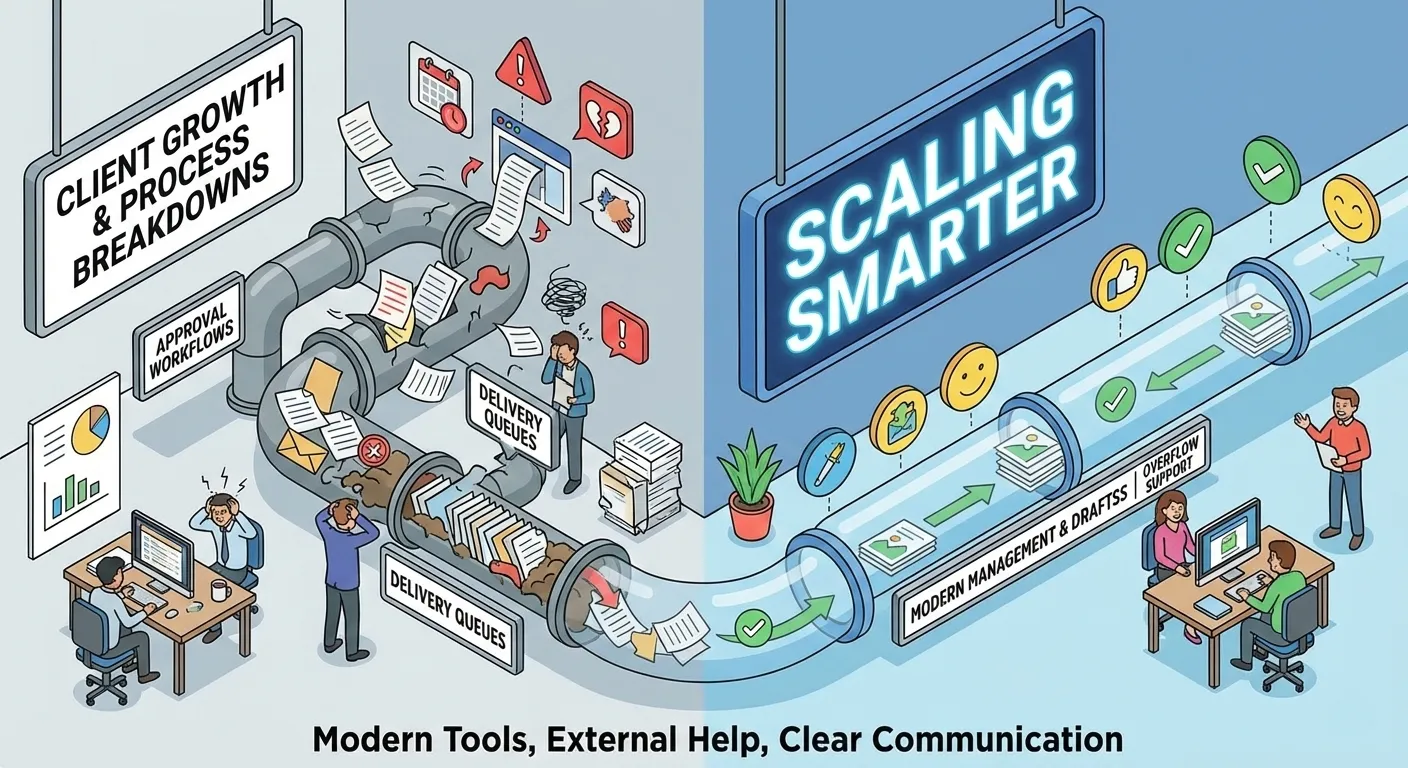
As agencies grow by taking on more clients, they often encounter significant process breakdowns that hinder efficiency and service quality. The core issue lies in outdated approval workflows and delivery queues that cannot handle the increased workload. Traditional approval steps can become slow and cumbersome, leading to frustrating delays.
Meanwhile, overwhelmed delivery queues may result in missed deadlines or lower quality work. Prioritization conflicts further complicate the situation when urgent tasks clash with strategic goals. By implementing modern tools for management, leveraging external help like Draftss for overflow work, and maintaining strong client relationships through clear communication, agencies can scale smarter without sacrificing performance or satisfaction.
Table of Contents
- Understanding Why Agency Processes Fail During Client Growth
- The Challenges of Approval Processes in Growing Agencies
- Impact of Increased Client Numbers on Delivery Queues
- Managing Prioritization Conflicts in a Busy Agency
- Identifying Operational Inefficiencies in Scaling Agencies
- Effective Resource Management Strategies for Agencies
- Adapting to Rapid Technological Changes in Agency Workflows
- Building Strong Client Relationships Amidst Growth
- Using Flexible Execution to Stabilize Agency Processes During Client Growth
- Frequently Asked Questions
Understanding Why Agency Processes Fail During Client Growth
Agencies often hit a wall when trying to scale their processes as their client base expands. Existing frameworks, crafted for a smaller clientele, quickly become inadequate, leading to operational hiccups and a dip in service quality. For instance, a once-smooth approval process can morph into a frustrating bottleneck, with multiple layers of sign-offs causing delays. As more clients come on board, the delivery queues can become congested, resulting in missed deadlines and burnout among team members. Communication issues can also escalate, especially when more stakeholders are involved, creating room for misunderstandings.
Moreover, without the right technology, agencies struggle to maintain workflow efficiency. Inadequate tools can hinder agility in responding to client requests, which are often more demanding as the agency grows. Decision-making slows down, and the need for faster, effective training on new tools becomes critical to prevent workflow chaos.
Teams must navigate cultural shifts within the agency that can disrupt dynamics and client relationships. Time management becomes essential, as multiple projects vie for attention, making it crucial to prioritize effectively. Increasing client expectations only add pressure, pushing teams to deliver quickly while maintaining high standards. To tackle these challenges, regular evaluations of processes and open feedback channels are vital to identify pain points early and adapt accordingly.
The Challenges of Approval Processes in Growing Agencies
!approval process challenges in growing agencies As agencies grow, the approval process often becomes a tangled web of delays and frustrations. With more clients comes the need for multiple layers of approvals, which can easily create bottlenecks. Imagine a project that needs sign-off from three or four stakeholders, all with differing priorities. This can lead to confusion and slow down timelines significantly. To combat this, agencies can harness digital tools like Asana or Monday.com, which streamline the approval process by providing clearer visibility and quicker feedback loops. Regular reviews of these processes are essential, as they can reveal areas needing improvement.
Establishing clear guidelines for approvals helps manage expectations and reduces the time spent on back-and-forth communications. Encouraging collaboration across teams can also expedite approvals, fostering creativity in the process. Additionally, delegating some approval authority can speed up decision-making, allowing teams to maintain momentum. Using templates for submissions can standardize requests and accelerate reviews. Training teams on effective communication minimizes misunderstandings, making the approval process smoother. Finally, gathering feedback from clients on the approval experience can provide valuable insights for further refinement, ensuring that the agency remains responsive to client needs as it scales.
| Challenges | Solutions |
|---|---|
| Multiple approval layers can create bottlenecks, delaying project timelines. | Implementing streamlined approval workflows and adopting collaborative platforms can enhance efficiency. |
| Stakeholders may have varying priorities, complicating the approval process. | Establish clear guidelines for approvals to manage expectations. |
| Digital tools can streamline approvals, reducing time spent on back-and-forth communications. | Tools like Asana and Monday.com allow for clearer visibility and quicker feedback loops. |
| Training teams on effective communication can minimize misinterpretations during approvals. | Encouraging collaboration across teams can expedite approvals and enhance creativity. |
| Regularly reviewing the approval process can highlight areas for improvement. | Delegating some approval authority can speed up decision-making. |
Impact of Increased Client Numbers on Delivery Queues
As agencies take on more clients, their existing delivery systems often face significant strain. The increased client numbers can easily overwhelm these systems, leading to delays and missed deadlines. When the workload grows, teams may find themselves stretched thin, which can reduce overall productivity. To combat this, utilizing project management software becomes crucial. Tools like Trello or Asana can help visualize workloads, allowing teams to see where bottlenecks might arise and how to address them efficiently.
Implementing a tiered priority system is another effective strategy. By organizing projects based on urgency, teams can focus on what truly matters, ensuring that critical tasks don’t fall through the cracks. Setting realistic deadlines is equally important. It not only helps manage client expectations but also reduces stress on team members, allowing them to deliver quality work without feeling overwhelmed.
Regularly assessing team performance is essential for identifying potential burnout risks early on. Creating a culture of support and collaboration can empower team members to communicate their needs and manage increased workloads more effectively. In cases where the demand becomes too high, outsourcing overflow work can be a lifesaver. This approach ensures that agencies maintain their service quality while meeting client demands.
Additionally, creating a buffer period in project timelines can help accommodate unexpected delays, making the workflow more adaptable. Gathering data on delivery performance can inform future resource planning, enabling agencies to make smarter decisions as they grow. All these measures combined can significantly enhance the agency’s ability to handle increased client numbers without sacrificing quality.
Managing Prioritization Conflicts in a Busy Agency
In a busy agency, conflicting project demands can create chaos and inefficiency. When multiple clients need attention at once, it becomes essential to distinguish between what is urgent and what is important. Frameworks like the Eisenhower Matrix can simplify this process, helping teams focus on tasks that genuinely move the needle. Regular team meetings are crucial for ensuring everyone is aligned on project priorities, allowing for discussions about what needs immediate attention and what can wait.
Visual tools, such as Kanban boards, offer a quick snapshot of project statuses and priorities, making it easier for everyone to see where things stand. Open communication about workload fosters collaboration, enabling team members to support each other more effectively. Establishing clear criteria for prioritization can guide decision-making, ensuring that the most impactful tasks are addressed first.
Flexibility in project timelines can be a game changer when priorities shift, allowing teams to adapt without feeling overwhelmed. A centralized project calendar keeps everyone informed of deadlines and priorities, reducing the chances of miscommunication. Training on effective prioritization techniques can significantly boost overall productivity, as team members learn to manage their time and resources better. Involving the entire team in prioritization discussions increases buy-in and accountability, making everyone more invested in the agency’s success.
Identifying Operational Inefficiencies in Scaling Agencies
As agencies expand, outdated processes can start to show their weaknesses. When workflows are designed for a smaller client base, they often falter under the pressure of growth. This can lead to slower operations and dissatisfaction among clients, which is something no agency wants. To combat this, conducting regular process audits can be invaluable. These audits reveal inefficiencies and highlight areas that need improvement, allowing teams to adapt and thrive.
Embracing technology is another game-changer. By automating repetitive tasks, agencies can enhance productivity and free up valuable time for creative and strategic work. Tools like Asana and Monday.com can simplify workflows, making it easier for teams to manage their tasks efficiently. Moreover, fostering a culture of continuous improvement encourages team members to actively seek out efficiencies and share their insights, creating a more dynamic work environment.
Gathering feedback from staff about operational pain points is crucial. They are on the front lines and can offer actionable insights that might not be visible from the management level. Additionally, benchmarking against industry standards helps agencies recognize gaps in their performance and identify areas where they can elevate their services.
Investing in training for staff on new tools maximizes their effectiveness, ensuring that everyone is on the same page and fully capable of leveraging technology. Clear documentation of processes enhances consistency and reduces errors, which is vital as teams scale.
Utilizing data analytics provides a window into workflow bottlenecks, allowing agencies to make informed decisions on where to focus their improvement efforts. Collaborating with other agencies to share best practices can also spark innovation and help agencies adopt strategies that have proven successful for their peers.
- Outdated processes can slow down operations and reduce client satisfaction.
- Conducting regular process audits can uncover inefficiencies and areas for improvement.
- Embracing technology can automate repetitive tasks and enhance productivity.
- Encouraging a culture of continuous improvement can motivate teams to seek efficiencies.
- Gathering feedback from staff about operational pain points can lead to actionable insights.
- Benchmarking against industry standards can highlight gaps in performance.
- Investing in training for staff on new tools can maximize their effectiveness.
- Creating clear documentation for processes can enhance consistency and reduce errors.
- Utilizing data analytics can provide insights into workflow bottlenecks.
- Collaborating with other agencies to share best practices can foster innovation.
Effective Resource Management Strategies for Agencies
Effective resource management is essential for agencies as they grow and take on more clients. Resource constraints can severely limit the ability to accept new projects, making it crucial to develop a solid resource allocation plan. This plan should ensure that staff and tools are used optimally, aligning with project demands. One smart strategy is to utilize freelance talent for specific projects, which provides flexibility without the burden of long-term commitments. Regular reviews of resource needs can help anticipate shortages before they become a crisis. Encouraging cross-training among team members creates a more versatile workforce, enabling quicker responses to changing workloads.
Implementing a project management tool can track resource usage and availability, making it easier to maintain efficiency. Establishing clear roles and responsibilities enhances accountability, ensuring that everyone knows their tasks and deadlines. Investing in resource management software offers real-time visibility into allocation, allowing for quick adjustments as needed.
Additionally, developing a strong network of freelancers can help agencies scale quickly when demand surges. Lastly, planning for seasonal variations in workload can help manage resources more effectively, keeping operations smooth even during peak times.
Adapting to Rapid Technological Changes in Agency Workflows
Emerging technologies are shaking up traditional agency workflows, making it essential for agencies to adapt quickly. Staying updated on industry trends helps agencies know when and how to implement new technologies. Creating a technology advisory team can be a game changer, as it allows agencies to evaluate new tools and platforms effectively. Investing in user-friendly technologies eases the transition process, boosting adoption rates among staff.
A well-structured technology training program empowers teams to maximize the benefits of new tools, ensuring everyone is on the same page. Encouraging innovation and experimentation fosters a culture that embraces change, making it easier to adapt when new technologies arise. Regular assessments of technology effectiveness help identify areas for improvement, ensuring that agencies are always operating at peak efficiency. Adopting cloud-based solutions enhances collaboration and accessibility, allowing teams to work seamlessly, regardless of their physical location.
Additionally, participating in tech-focused workshops and conferences keeps teams informed and engaged with the latest advancements. Building strong partnerships with tech providers offers agencies the support and resources they need to navigate technological shifts successfully.
Building Strong Client Relationships Amidst Growth
As agencies expand, the challenge of maintaining personalized client interactions grows significantly. Regular communication, through updates and check-ins, is vital to strengthen these relationships. Utilizing CRM systems can streamline client information and communication history, making it easier to tailor services to individual client needs, which enhances satisfaction and loyalty.
Gathering client feedback is another key practice; it helps agencies refine their offerings and improve service. Establishing clear expectations during onboarding minimizes misunderstandings, while exceptional customer service can set an agency apart in a competitive market. Creating regular client touchpoints fosters trust and transparency, making clients feel valued. Investing in client relationship management training empowers staff to build strong connections, and celebrating client milestones reinforces relationships and shows appreciation.
Using Flexible Execution to Stabilize Agency Processes During Client Growth
As agencies take on more clients, the strain often shows up in their workflows rather than in their teams. Processes built for a smaller volume of work start to bend under increased demand. Handoffs become inconsistent, timelines compress, and internal teams are pulled into execution-heavy tasks that distract from strategic work.
One way agencies address this pressure is by introducing flexible execution support into their processes. Instead of permanently expanding headcount or reworking internal systems mid-growth, teams can offload defined design and development tasks when demand spikes. This helps maintain consistency in delivery without forcing internal teams to absorb unpredictable workloads.
By treating external execution as part of their operating model rather than a last-minute fix, agencies can reduce bottlenecks and protect their core workflows. Over time, this approach allows processes to scale more smoothly alongside client growth, helping agencies stay reliable and focused even as complexity increases.
Frequently Asked Questions
What makes agency processes fail as clients grow?
Agency processes often fail during client growth because they can’t keep up with increasing demands, leading to overwhelmed teams and miscommunication.
Why is client growth different from team growth?
Client growth often involves rapid changes in expectations and project sizes, whereas team growth could mean simply adding more people without altering processes.
How can agencies handle the challenges of client growth?
Agencies can handle client growth by regularly updating their processes, improving communication, and investing in training for their team.
What signs indicate that agency processes are breaking?
Signs include missed deadlines, client complaints, and confusion among team members about project tasks and responsibilities.
What are the consequences of broken processes during client growth?
Broken processes can lead to unhappy clients, decreased quality of work, and a chaotic work environment, which ultimately affects the agency’s reputation and success.
TL;DR Agency processes rarely break because teams grow. They break because client volume grows faster than the systems built to support it.
Approval chains designed for fewer stakeholders become bottlenecks. Delivery queues built for smaller workloads clog under demand. Prioritization conflicts rise as urgent requests collide with strategic work. Without structural updates, more clients simply multiply coordination friction, delays, and rework.
The solution is not just adding people. It is modernizing execution systems. Streamlined approval workflows, clearer prioritization frameworks, better resource visibility, and adaptive tooling allow processes to scale with demand.
Flexible execution support can further stabilize operations by absorbing defined delivery work when volume spikes, protecting internal workflows from overload. When agencies treat process design as seriously as client acquisition, growth becomes sustainable instead of chaotic.
Scalable agencies do not just win more business. They build systems that can carry it.
Drop your thoughts in the comments below.
Your email address will not be published. Required fields are marked *