




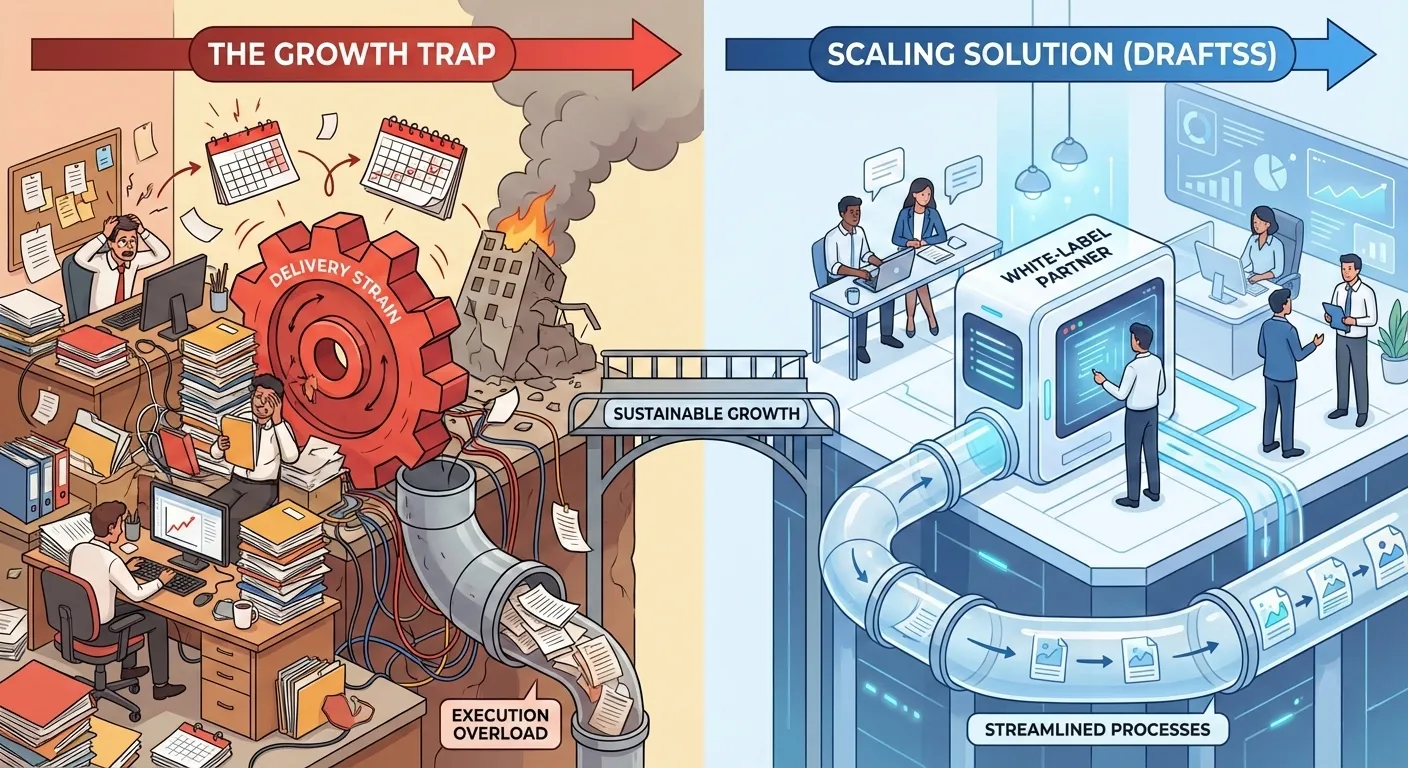
When agencies chase after “more clients,” they often find themselves in an overwhelming situation. The delivery strain can lead to execution overload, causing systems to collapse under the weight of increased volume. This is where the challenges become evident, as workflow bottlenecks arise and project quality suffers. Fortunately, solutions like Draftss come into play as a white-label execution partner. They help agencies manage those daunting workloads effectively, allowing for a smoother transition into scaling without sacrificing quality or efficiency. With the right partners and strategies in place, agencies can thrive instead of breaking under pressure when expanding their clientele.
Table of Contents
- When Growth Becomes a Burden
- Understanding Delivery Strain in Agencies
- How Execution Overload Hurts Scalability
- Why Systems Collapse Under Client Volume
- Amplifying Bottlenecks with Increased Clients
- Avoiding the Growth Hype for Agencies
- Solution for Managing Workloads
- The Role of White-Label Partners in Scaling
- Streamlining Processes to Handle More Clients
- Balancing Client Growth with Sustainable Revenue
- Frequently Asked Questions
When Growth Becomes a Burden
Many agencies fall into the trap of believing that more clients automatically translate to more revenue, but this mindset can lead to a host of significant challenges. As client numbers rise, the complexities and demands on agency resources increase, often overwhelming teams that are already stretched thin. The increased workload can result in employee burnout, drastically affecting productivity and morale. For instance, a small agency that takes on five new clients in a single month may soon find its staff working late nights and weekends just to keep up, leading to a decrease in job satisfaction and an uptick in turnover.
Moreover, as the client roster expands, the pressure to maintain quality escalates. Agencies may struggle to deliver the same level of service they once provided when they had fewer clients, which puts their reputation at risk. The illusion of growth can obscure deeper operational inefficiencies, such as poor communication and disorganized processes, that need to be addressed to build a sustainable business. As client expectations rise with volume, it becomes increasingly challenging to deliver consistent value, leading to frustration for both clients and staff.
Without streamlined processes in place, chaos can ensue, resulting in missed deadlines and misaligned priorities. Teams juggling multiple projects may find communication breaking down, which only compounds the stress. Agencies often lack the necessary systems to scale effectively, and this lack of preparation can lead to a potential collapse under pressure. Identifying and addressing these issues early on is crucial for any agency that hopes to achieve sustainable growth.
- Many agencies believe that more clients equal more revenue, but this mindset can lead to significant issues.
- As client numbers rise, so do the complexities and demands on agency resources, often overwhelming teams.
- Increased workload can lead to burnout among employees, affecting productivity and morale.
- Agencies may struggle to maintain quality as they take on more clients, risking their reputation.
- The illusion of growth can mask underlying operational inefficiencies that need addressing.
- Client expectations rise with volume, making it harder to deliver consistent value.
- A lack of streamlined processes can lead to chaos and missed deadlines, frustrating both clients and staff.
- Agencies often lack the systems necessary to scale effectively, leading to potential collapse under pressure.
- Communication may break down as teams juggle multiple projects, resulting in misalignment and errors.
- Identifying and addressing these issues early on is crucial for sustainable growth.
Understanding Delivery Strain in Agencies

Delivery strain is a critical challenge that agencies face as they take on more client projects. This strain refers to the stress and pressure placed on teams who juggle multiple projects simultaneously. As the number of clients grows, agencies often struggle to meet tight deadlines without sacrificing the quality of their work. This can lead to project delays, which can severely impact client relationships and the agency’s reputation.
To effectively manage this strain, agencies must prioritize project management. Balancing workloads and timelines becomes essential in the face of an influx of clients. Many agencies find that adopting new technologies can streamline communication and task management, enabling them to keep up with the increased demands. Understanding team capacity is crucial; pushing staff too hard can result in burnout and turnover, which further complicates the agency’s ability to deliver.
Delivery strain can also stifle creativity and innovation, as constant pressure leaves little room for fresh ideas. Regular check-ins and feedback loops are vital for helping teams manage stress and maintain productivity. Identifying bottlenecks in workflows can alleviate some of the delivery strain, allowing teams to focus on what truly matters, delivering high-quality work on time. A proactive approach to managing this strain not only enhances client satisfaction but also boosts retention, ensuring that agencies can thrive even as they scale.
| Aspect | Description | Impact |
|---|---|---|
| Delivery Strain | Stress on teams managing multiple projects simultaneously | Challenges in meeting deadlines without compromising quality |
| Project Management | Essential for balancing workloads and timelines | Helps prevent project delays that can damage client relationships |
| Team Capacity | Key to avoid pushing too hard | Helps reduce staff turnover and maintain productivity |
| Creativity and Innovation | Can be reduced under constant pressure | Limits agency’s ability to develop new ideas |
| Check-ins and Feedback Loops | Necessary for managing stress effectively | Supports team morale and communication |
| Bottlenecks Identification | Critical for alleviating delivery strain | Improves overall workflow efficiency |
| Proactive Management | Enhances client satisfaction and retention | Builds long-term client relationships |
How Execution Overload Hurts Scalability
Execution overload is a real challenge for agencies, particularly when they start taking on more clients than they can handle. This situation arises when teams are bombarded with multiple demands at once, making it tough to keep up with quality and timelines. For instance, if an agency takes on ten projects simultaneously, the chances are high that the quality of work will falter, leading to client dissatisfaction. Instead of focusing on innovative solutions, teams might find themselves scrambling just to meet deadlines, stifling creativity and fresh ideas. To combat this, agencies need to establish clear priorities and focus areas, ensuring that team members know what to tackle first.
Balancing workload is crucial too; it’s important that no one is overloaded, as this can lead to burnout and decreased productivity. Regularly assessing project loads can help managers spot when teams are nearing their limits. Additionally, utilizing white-label partners can provide much-needed support, allowing agencies to manage increased workloads without sacrificing quality. Creating a culture of open communication is vital, enabling team members to express their concerns about workload pressures. Furthermore, ongoing training and development can equip teams with the skills they need to handle higher demands effectively. Adopting agile methodologies can also foster quick adaptations to changing client requirements, ensuring that staff are not overwhelmed while still meeting client needs.
Why Systems Collapse Under Client Volume
As agencies expand, their existing processes often struggle to keep up with the influx of new clients. When systems are outdated or poorly designed, they fail to manage increased workloads efficiently, leading to operational breakdowns. For instance, if an agency relies on manual tracking for project timelines, the risk of delays skyrockets as client numbers grow. This creates bottlenecks in workflows where tasks pile up, frustrating both team members and clients alike. To successfully scale, agencies need robust infrastructure, including technology and skilled personnel, that can adapt to a larger client base. Investing in scalable solutions is essential for sustainable growth. Regular reviews and updates to systems ensure they meet current demands and do not become obsolete. Additionally, training staff on new technologies can enhance overall efficiency, minimizing the chances of a collapse under pressure. As client volume rises, effective data management becomes crucial; mishandled information can lead to costly mistakes. Agencies should also develop contingency plans to proactively address potential system failures, safeguarding against disruptions. Emphasizing continuous improvement will help agencies build resilient systems capable of thriving even as client numbers surge.
Amplifying Bottlenecks with Increased Clients
Bottlenecks are the hidden culprits that can turn a thriving agency into a chaotic environment, especially when the client list grows. These points in a process slow down productivity, and as the number of clients increases, the pressure on existing workflows intensifies. For instance, if an agency relies on a manual approval process for projects, adding more clients can lead to delays that ripple through the entire system. This situation shines a spotlight on weaknesses and inefficiencies that may have gone unnoticed during quieter periods.
To tackle these bottlenecks, agencies need to conduct a thorough analysis of their current processes. Identifying where delays occur is crucial, and visual tools can help map out workflows to see the bigger picture. Team feedback is invaluable in this process; employees often have firsthand experience with where things slow down and can propose practical solutions. For example, if a design team struggles with client feedback loops, they might suggest a more streamlined communication channel to speed things up.
Streamlining communication and collaboration can significantly reduce bottlenecks. Implementing automation for repetitive tasks, like data entry or report generation, can free up team members to focus on higher-value activities, such as creative brainstorming or developing client relationships. Prioritizing projects based on urgency and importance also helps minimize the impact of bottlenecks, ensuring that critical tasks are completed on time.
Regularly reviewing workflows allows agencies to adapt to changing client demands more effectively. Establishing a feedback loop can create a culture of continuous improvement, where bottlenecks are routinely identified and addressed. By staying proactive, agencies can maintain their momentum and prevent the strain of increased client volume from derailing their growth.
Avoiding the Growth Hype for Agencies
Growth hype can be a tempting trap for agencies, pushing them to take on more clients than they can realistically manage. This often leads to operational strain, where the quality of work and client satisfaction can suffer. Instead of chasing every opportunity, agencies should focus on sustainable growth. Setting realistic goals based on current capabilities allows for healthier development. For instance, an agency might recognize it can handle five new clients this quarter without stretching resources too thin, rather than trying to onboard ten and risking burnout.
Understanding the demand in the market alongside the agency’s capabilities is crucial for crafting effective growth strategies. A disciplined approach to client acquisition and project management can help maintain balance. Regular resource assessments ensure that the team isn’t overextended. A strong foundation built on solid processes and quality work can prevent agencies from falling victim to the growth hype.
Education plays a vital role as well. By informing teams about the risks associated with rapid growth, a more cautious approach can be adopted, prioritizing long-term success over immediate gains. Focusing on nurturing client relationships and delivering exceptional work fosters organic growth, leading to a more sustainable trajectory. In the end, agencies thrive when they emphasize steady progress rather than getting swept away by the allure of quick wins.
Solution for Managing Workloads
Agencies often experience periods of uneven demand that make expanding internal teams inefficient. Draftss can be used to handle design and development tasks during these peak periods, allowing agencies to manage workloads without changing team structure or hiring. This approach helps maintain timelines and control operational overhead.
Draftss is typically used when agencies take on additional clients or projects that exceed current capacity. By integrating Draftss into existing workflows, teams can keep projects moving on schedule. Turnaround times are structured to align with agency delivery timelines, ensuring consistency in client work.
Agencies may also use Draftss to supplement in-house skills or extend services already offered. This allows internal teams to focus on planning, client management, and strategy while handling variable workloads effectively.
The Role of White-Label Partners in Scaling
White-label partners play a crucial role for agencies looking to ramp up their client base without being overwhelmed. By outsourcing certain services, agencies can deliver high-quality work without having to manage every detail internally. This not only lightens the load but also allows agencies to present a more comprehensive suite of services, enhancing their competitive edge in the market.
For instance, consider an agency that specializes in digital marketing but lacks the in-house resources for graphic design. By collaborating with a white-label partner, they can offer stunning visuals without stretching their team thin. This partnership can help manage overflow work effectively, alleviating execution overload and ensuring timely delivery. Faster turnaround times lead to happier clients, which is essential for any growing agency.
Utilizing external resources keeps agencies flexible and responsive, enabling them to adapt quickly to client needs. Additionally, white-label solutions can be a smart way to cut staffing costs while maintaining quality. Instead of hiring full-time employees for every project, agencies can tap into these partnerships as needed, allowing them to scale at their own pace.
By freeing up internal teams from day-to-day tasks, agencies can concentrate on strategic growth initiatives. The right white-label partner can become a vital ally, helping to create a stable foundation for long-term success. In a landscape where more clients can mean more chaos, these partnerships offer a lifeline for agencies striving to grow efficiently.
Streamlining Processes to Handle More Clients

Streamlining processes is essential for agencies looking to manage more clients effectively. The first step is identifying key areas for improvement; for instance, recognizing bottlenecks in the workflow can reveal where things slow down. By standardizing procedures, agencies can eliminate confusion, allowing team members to focus on their tasks with greater efficiency. Implementing project management tools is another game changer, as they help track progress, deadlines, and resource allocation more effectively. Regular training ensures that everyone on the team is aligned on procedures and expectations, which fosters a more cohesive working environment.
Automating routine tasks can also be a lifesaver, freeing up valuable resources for more complex and creative work, allowing teams to focus on what truly matters. Encouraging collaboration and open communication among team members enhances teamwork, making it easier to navigate challenges together. Regularly reviewing and refining processes allows agencies to adapt to changing client demands, ensuring they remain competitive. Involving team members in these discussions not only generates valuable insights but also increases their buy-in, leading to a culture of continuous improvement. This proactive approach helps agencies stay ahead of challenges, paving the way for sustainable growth.
Balancing Client Growth with Sustainable Revenue
Balancing client growth with sustainable revenue is essential for agencies aiming for long-term success. Instead of chasing explosive growth that can overwhelm resources, agencies should focus on a steady increase in clients. Understanding the cost of acquiring new clients compared to the revenue they bring is vital, as it helps in making informed decisions. By focusing on high-value clients that provide consistent revenue streams, agencies can create a more stable financial foundation. Setting clear financial goals aligned with client growth supports operational stability, allowing agencies to expand without jeopardizing service quality. Regularly reviewing financial health can guide better decision-making regarding client acquisition and retention strategies.
Additionally, diversifying service offerings enables agencies to attract different client segments, reducing reliance on just a few clients and spreading risk. Keeping an eye on market trends helps agencies anticipate shifts in demand, allowing them to adjust strategies proactively. Ultimately, sustainable revenue empowers agencies to invest in their teams and infrastructure, setting the stage for future growth while ensuring they can deliver quality service as they expand.
Frequently Asked Questions
Why does taking on more clients often create operational problems for agencies?
The execution gap refers to the difference between the strategies agencies come up with and how well they actually deliver those plans. Agencies may have great ideas, but sometimes the follow-through is lacking.
What is delivery strain and how does it affect agency performance?
Delivery strain refers to the pressure teams experience when managing multiple projects at once. It often results in reduced productivity, slower turnaround times, and limited capacity for creativity, which can impact both client satisfaction and team morale.
How does execution overload limit an agency’s ability to scale?
Execution overload occurs when teams are responsible for more work than they can reasonably handle. This prevents agencies from scaling efficiently because resources are spent on firefighting instead of improving systems, processes, and long-term strategy.
Why do agency systems collapse as client volume grows?
Many agency systems are designed for smaller workloads. As volume increases, outdated tools, manual processes, and poor communication structures struggle to keep up, creating bottlenecks and operational breakdowns.
How can white-label partners help agencies manage growth?
White-label partners allow agencies to offload execution work during peak demand without expanding internal teams. This provides flexibility, helps maintain delivery timelines, and supports consistent quality while agencies focus on strategy and client management.
How does Draftss support agencies during high workload periods?
Draftss works as a white-label execution partner, handling design and development tasks when agency capacity is limited. By integrating into existing workflows, Draftss helps agencies manage fluctuating demand without altering internal structure or hiring processes.
TL;DR Discover why chasing more clients can lead to chaos for agencies before they scale effectively. Explore delivery strain, execution overload, and the collapse of systems under increased volume. Learn how Draftss, as a white-label partner, helps manage workloads and streamline processes to ensure sustainable growth while balancing client demands.
Drop your thoughts in the comments below.
Your email address will not be published. Required fields are marked *