




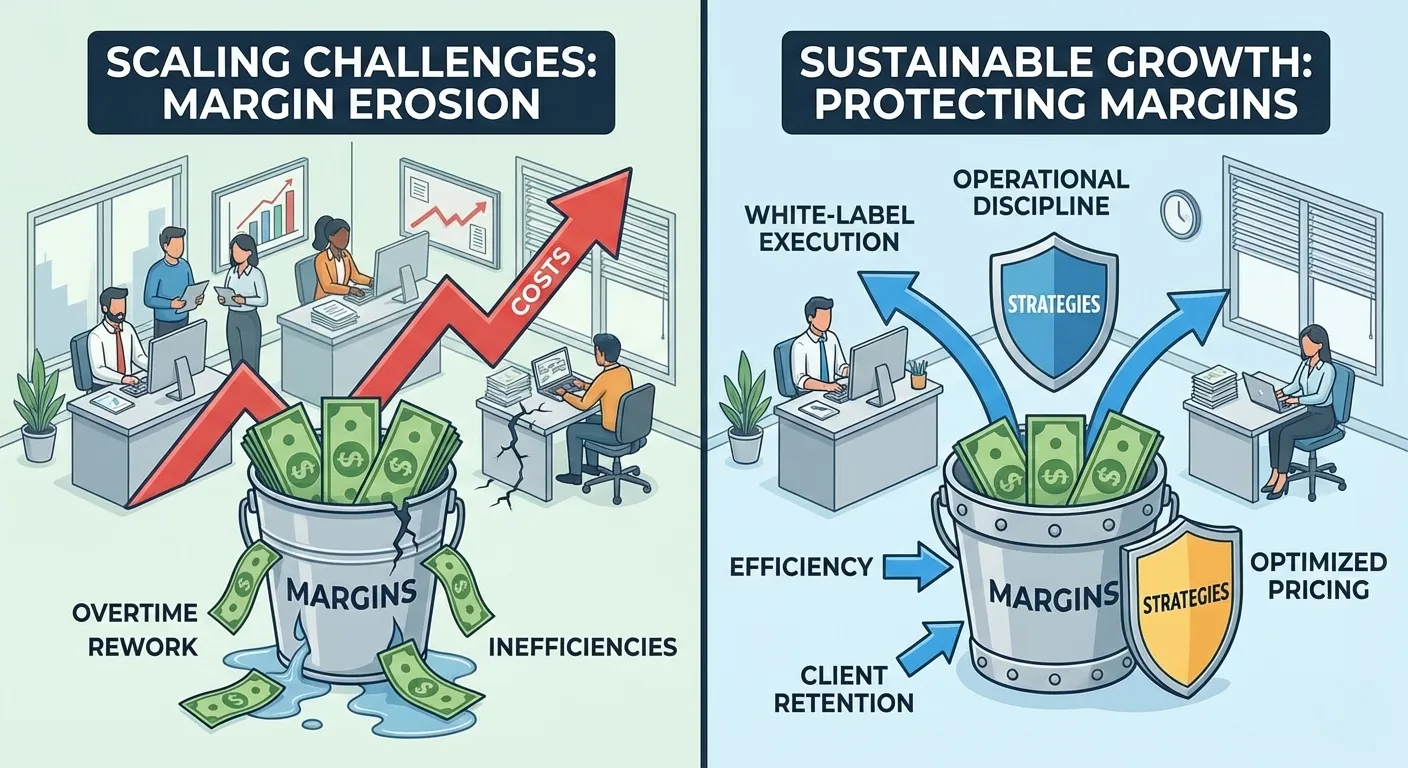
As agencies scale, they face the hidden threat of margin erosion. This happens when costs increase much faster than revenue, particularly in service-based fields where labor is a major expense. A mix of operational inefficiencies and reactive hiring practices can lead to wasted resources and misaligned roles, increasing overall costs. Issues like rework and overtime exacerbate this problem further, creating a cycle of dissatisfaction for clients. To combat these challenges, agencies can adopt strategies such as white-label execution or optimizing pricing models to align better with the value delivered. By enhancing operational discipline and focusing on client retention, agencies can protect their margins while growing sustainably.
Table of Contents
- Understanding Margin Erosion in Growing Agencies
- Hidden Costs That Hurt Your Margins
- Tying Margin Loss to Delivery Delays
- Effective Strategies to Protect Your Margins
- Leveraging White-Label Execution for Growth
- Optimizing Pricing for Better Profitability
- Enhancing Operational Discipline to Reduce Costs
- Improving Client Retention for Sustainable Margins
- Frequently Asked Questions
Understanding Margin Erosion in Growing Agencies
Margin erosion can sneak up on agencies, often remaining hidden until it starts to significantly affect the bottom line. To combat this, agencies need to proactively identify where costs are outpacing revenue. A thorough analysis of their cost structure is essential, as it reveals areas where expenses rise more quickly than profits. Investing in technology can be a game changer, enhancing efficiency and reducing operational inefficiencies that contribute to margin loss. Regular team training aligns expectations and skills, minimizing miscommunication and redundancy, which can otherwise lead to wasted resources.
Establishing clear performance metrics is crucial. It helps agencies track efficiency and effectiveness as they scale, ensuring that their growth aligns with their objectives. A culture of continuous improvement empowers employees to spot inefficiencies before they balloon into bigger issues. Benchmarking against industry standards also provides valuable insights into operational efficiencies and cost management opportunities.
Agencies should revisit and refine their service offerings regularly, ensuring that pricing reflects the value they provide. Encouraging cross-department collaboration breaks down silos, fostering better communication and boosting productivity. Leadership must prioritize a strategic growth plan that aligns with the agency’s long-term vision. This way, every team member understands their role in achieving shared goals.
Hidden Costs That Hurt Your Margins
Hidden costs can creep into an agency’s operations, quietly eating away at profits without immediate notice. These costs, often overlooked, can accumulate and significantly impact overall profitability, making it essential to track all expenses meticulously. For instance, rework can lead to dissatisfaction among clients, resulting in additional costs for the agency through discounts or refunds. Regular audits of project budgets help uncover these hidden costs, providing valuable insights for future projects and enabling better financial planning.
Inadequate planning is another culprit, often leading to unexpected expenses. By implementing thorough project management practices, agencies can mitigate this risk and keep projects on track. Encouraging open communication among team members can help identify potential issues early, preventing costly rework down the line.
Setting aside a budget for contingencies is another smart move, as it helps absorb unexpected costs without directly affecting margins. Moreover, regularly reviewing freelancer performance ensures they deliver value, which involves setting clear expectations and deadlines. Training staff on efficient work practices can also reduce overtime costs and improve productivity. Finally, creating a culture of transparency around costs encourages team members to be mindful of expenses, leading to better overall cost management. By addressing these hidden costs, agencies can significantly improve their margins and achieve sustainable growth.
| Hidden Cost | Impact on Margins | Mitigation Strategies |
|---|---|---|
| Rework | Increases labor costs and client dissatisfaction | Track projects meticulously and provide clear initial guidelines |
| Overtime | Leads to increased costs without improving output quality | Plan resources effectively and monitor workload |
| Hiring Drag | Results in inefficiencies and unclear roles | Implement a thorough vetting and training process |
| Freelancer Inefficiency | Can cause miscommunication and oversight issues | Regularly manage and review freelancer performance |
Tying Margin Loss to Delivery Delays
Delivery delays can significantly impact client satisfaction, which often leads to a loss of business and increased costs from redoing work. When clients aren’t happy with the timing of their projects, the ripple effect can result in lost trust and future opportunities. By identifying the root causes of these delays, such as unclear communication or inadequate resources, agencies can develop effective solutions. For instance, utilizing project management tools can help agencies visualize workflows and identify bottlenecks early on, allowing for timely adjustments.
Regular check-ins with project teams foster accountability and keep everyone aligned on deadlines, reducing the chances of delays. Establishing clear timelines and expectations with clients not only manages their expectations but also helps in reducing dissatisfaction. Improving onboarding processes for new hires can streamline project initiation, which in turn minimizes delays caused by miscommunication.
Creating a buffer in project timelines provides flexibility to account for unexpected issues, ensuring smoother delivery schedules. Encouraging collaboration among departments prevents siloed information from causing delays in project execution, making the whole operation more efficient. Moreover, conducting post-project reviews allows agencies to learn from delivery delays and implement better practices for future projects. Utilizing data analytics to track project timelines offers insights that can improve future project delivery rates, ultimately protecting margins as agencies scale.
Effective Strategies to Protect Your Margins
To safeguard your margins effectively, consider implementing a white-label execution strategy. This approach allows you to meet client demands without the burden of permanent costs, providing flexibility and scalability. Regularly reviewing your pricing strategies is crucial; ensure they reflect the value you deliver. This not only protects your margins but also positions your agency as a trusted partner. Streamlining processes to eliminate waste can significantly boost operational efficiency, and training your staff on time management will lead to better resource allocation, reducing unnecessary expenses.
Building strong relationships with reliable external partners can also help you maintain flexibility while minimizing costs associated with hiring full-time staff. Encouraging feedback from clients is essential; it helps identify service delivery improvements, ultimately leading to higher client retention. Create a revenue forecast to anticipate financial challenges, allowing you to adjust strategies proactively. Implementing a tiered pricing model can offer clients various options while ensuring that your higher-value services are adequately compensated. Finally, regularly analyzing competitor pricing ensures that you remain competitive without compromising your margins. Investing in technology to automate repetitive tasks can free up your team to focus on higher-value activities, further strengthening your profit margins.
- Implementing a white-label execution strategy allows agencies to meet demands without incurring permanent costs.
- Regularly reviewing pricing strategies to ensure they reflect the value provided can help agencies maintain healthy margins.
- Streamlining processes to eliminate waste can significantly improve operational efficiency, protecting margins.
- Training staff on time management and efficiency can lead to better resource allocation and reduced costs.
- Fostering relationships with reliable external partners can provide agencies with flexibility and reduce the costs associated with hiring full-time staff.
- Encouraging feedback from clients can help agencies identify areas for improvement in service delivery, leading to higher client retention.
- Creating a revenue forecast can help agencies anticipate potential financial challenges and adjust strategies accordingly.
- Implementing a tiered pricing model can provide clients with more options while ensuring that higher-value services are adequately compensated.
- Regularly analyzing competitor pricing can help agencies position their services competitively while protecting margins.
- Investing in technology that automates repetitive tasks can free up resources, allowing agencies to focus on higher-value activities.
Leveraging White-Label Execution for Growth
White-label solutions are game changers for agencies looking to scale efficiently. They provide a pathway to expand service offerings without the hefty burden of hiring permanent staff. Imagine being able to quickly deliver a wider range of services, all while keeping overhead low. This flexibility allows agencies to focus on their core competencies, outsourcing non-core functions to dedicated partners. By doing so, they enhance operational efficiency and avoid the pitfalls of hiring mistakes that can lead to wasted resources.
Establishing clear contracts with white-label partners is crucial. These contracts ensure that quality and performance standards are met, which is vital for maintaining an agency’s reputation. Regular assessments of these partners can help agencies ensure they are meeting expectations, which is essential for protecting margins. Building strong relationships with these partners opens doors for collaboration and mutual growth, creating a win-win situation.
Moreover, white-label services can serve as a testing ground for new offerings. Agencies can experiment with services before fully committing to in-house development, reducing risk and enabling diversified revenue streams. The ability to adjust resources according to project demands means that agencies can maintain flexibility, scaling up or down as needed without the long-term commitment of permanent hires. This adaptability is key to navigating the often unpredictable landscape of client needs and market trends.
Optimizing Pricing for Better Profitability
Agencies can significantly improve their profitability by optimizing their pricing strategies. Adopting value-based pricing is a game-changer, as it aligns client costs with the quality and effectiveness of the services provided. This approach not only enhances margins but also builds stronger relationships with clients who perceive the value of what they are paying for. Regularly reviewing pricing strategies in response to market changes is also essential. It allows agencies to stay competitive and adjust to economic fluctuations or shifts in client expectations.
Offering tiered pricing options is another smart strategy. By catering to different client budgets, agencies can maximize their revenue potential while accommodating varying levels of service. Bundling services can further encourage clients to purchase more, increasing average transaction values and creating a win-win scenario.
Conducting market research to understand client perceptions of value can inform these pricing strategies. It enables agencies to set prices that reflect the true worth of their offerings. Implementing dynamic pricing models helps adjust prices based on demand and resource availability, ensuring agencies capitalize on market opportunities. Educating clients about the value of services justifies higher pricing and can lead to better profit margins.
Regular analysis of profit margins by service type reveals areas for improvement. This insight can guide adjustments in pricing or service delivery. Utilizing technology to automate pricing adjustments ensures timely responses to market conditions, enhancing profitability. Establishing a review process for pricing strategies keeps them aligned with overall business objectives and industry standards, supporting a sustainable growth model for agencies.
Enhancing Operational Discipline to Reduce Costs
Implementing standard operating procedures can be a game-changer for agencies striving to scale. These procedures streamline operations, minimize inefficiencies, and create a clear roadmap for every team member. Regular training sessions keep staff updated on best practices, ensuring everyone operates at peak efficiency. By fostering a culture of accountability, agencies encourage team members to take ownership of their roles, leading to fewer errors and less rework. Utilizing performance metrics allows agencies to track efficiency and pinpoint areas needing improvement. Regular team meetings enhance communication, addressing potential issues before they escalate into costly problems.
Encouraging cross-functional teams enhances collaboration and boosts problem-solving capabilities. Investing in project management tools provides better oversight of resources and timelines, reinforcing overall operational discipline. Conducting routine reviews of operational processes helps identify waste and streamline workflows. Setting clear goals and expectations gives teams direction, keeping them focused and motivated. Finally, creating an environment where feedback is welcomed can spark continuous improvement and operational excellence.
Improving Client Retention for Sustainable Margins
Building strong relationships with clients is essential for enhancing loyalty and boosting retention rates. When clients feel valued and understood, they are more likely to stick around, reducing the costs associated with acquiring new customers. Regular communication plays a pivotal role in this process, as it helps agencies grasp clients’ needs and expectations, preventing potential dissatisfaction before it escalates. Implementing a client feedback system can yield valuable insights, allowing agencies to refine service quality and address concerns promptly.
Moreover, offering loyalty programs or discounts for repeat business can motivate clients to maintain their partnership with the agency, creating a win-win scenario. By regularly reviewing client accounts, agencies can identify opportunities for upselling or cross-selling services, which can significantly increase overall revenue. Personalizing service experiences can also enhance client satisfaction, making them more inclined to stay long-term.
Conducting exit interviews with clients who decide to leave can illuminate areas for improvement, providing actionable insights that can strengthen future client relationships. Establishing a comprehensive client onboarding process helps set clear expectations and creates a positive first impression, fostering trust from the get-go. Encouraging referrals from satisfied clients opens doors to new business opportunities, ultimately reducing marketing costs. Finally, investing in client relationship management (CRM) systems can empower agencies to effectively track interactions and enhance client engagement, ensuring that every touchpoint is meaningful and impactful.
Frequently Asked Questions
What are some common reasons agencies lose money as they grow?
Agencies often lose money while scaling due to factors like inefficient processes, overstaffing, underestimated project costs, and failure to adapt to client needs.
How does poor communication impact an agency’s margins?
Poor communication can lead to misunderstandings and mistakes, resulting in extra work and costs that cut into profits.
Why is it important for agencies to track their performance metrics?
Tracking performance metrics helps agencies identify areas of improvement, spot inefficiencies, and make informed decisions to maintain healthy profit margins.
Can client expectations affect an agency’s scalability?
Yes, unrealistic client expectations can strain resources and lead to scope creep, which can hurt an agency’s ability to maintain profitable margins.
How do staffing decisions play a role in maintaining agency margins?
Staffing decisions are crucial; hiring too many employees can increase costs, while understaffing can lead to burnout and loss of quality, both of which can erode margins.
TL;DR As agencies grow, revenue increases but margins often shrink. The issue is not scaling itself. It is how scaling multiplies hidden delivery costs.
Reactive hiring, rework, overtime, delivery delays, and inefficient processes quietly push labor costs up faster than pricing evolves. More projects start creating more operational pressure, not more profit.
Protecting margins requires operational control, not just more sales. Agencies that combine disciplined processes, value-based pricing, and the ability to expand delivery capacity without permanent hiring through white-label support can scale without bloating fixed costs.
When delivery becomes flexible and turnaround times stay predictable, growth stops eroding margins and starts compounding profit.
Drop your thoughts in the comments below.
Your email address will not be published. Required fields are marked *