Limited Time Offer: 50% OFF on All Plans for 6 months. New Customers Only.


Plausible
Plausible's hero positions it as a simpler, privacy-friendly Google Analytics alternative, adds an EU hosting note plus trial and demo CTAs, and shows its one-page dashboard.
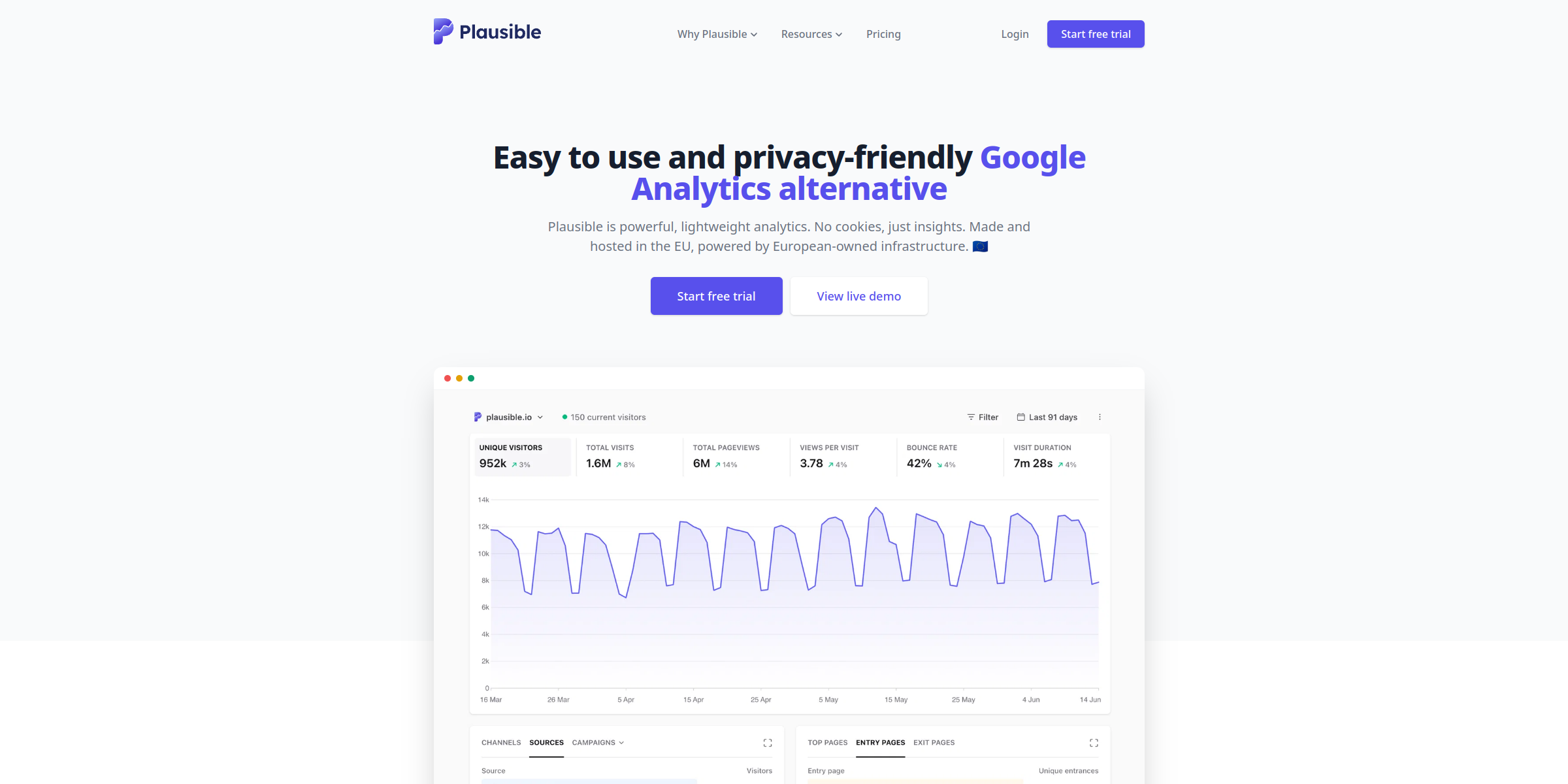
This Plausible hero section makes a sharp, confident case for privacy-first analytics in just a few lines.
Here’s why it stands out:
1. Positioning Against a Known Giant
The headline “Easy to use and privacy-friendly Google Analytics alternative” instantly tells visitors what Plausible is by anchoring it to a tool they already know. Naming Google Analytics frames the product as the simpler, more ethical switch.
2. Benefit-Packed Subheadline
The subtext “Plausible is powerful, lightweight analytics. No cookies, just insights.” compresses the core value into a short, rhythmic line. “No cookies, just insights” is memorable and speaks directly to site owners tired of consent banners and bloated scripts.
3. Clear Trust Signal on Data Location
The line “Made and hosted in the EU, powered by European-owned infrastructure” with an EU flag adds a concrete compliance and sovereignty angle. For privacy-conscious and European buyers, this answers a key objection before it is raised.
4. Dual Call-to-Action
The primary “Start free trial” button sits next to a secondary “View live demo” option. This serves both ready-to-buy visitors and those who want to explore first, without forcing either into a sign-up.
5. Friction-Reducing Microcopy
Directly under the buttons, “30-day free trial · No credit card required” removes the main hesitation around trying a paid tool. Placing it right at the point of action makes the CTA feel low-risk.
6. Product Shown, Not Just Described
A screenshot of the analytics dashboard sits in the hero, letting visitors see the single-page, uncluttered reporting view for themselves. It backs up the “easy to use” promise in the headline.
7. Focused, Uncluttered Message
The hero sticks to one idea (simple, private analytics) with no competing badges or extra copy. That restraint mirrors the product itself, which pitches itself as lighter and less complex than Google Analytics.