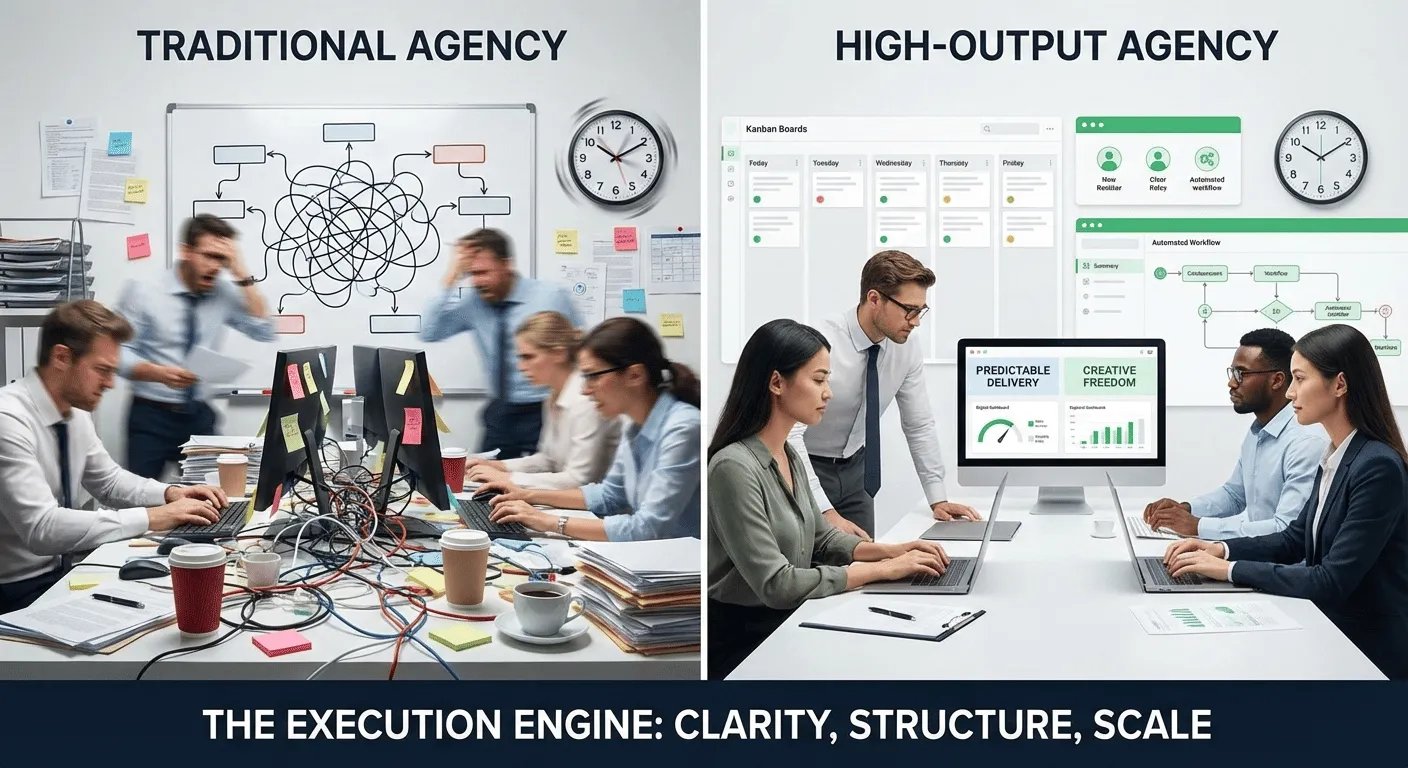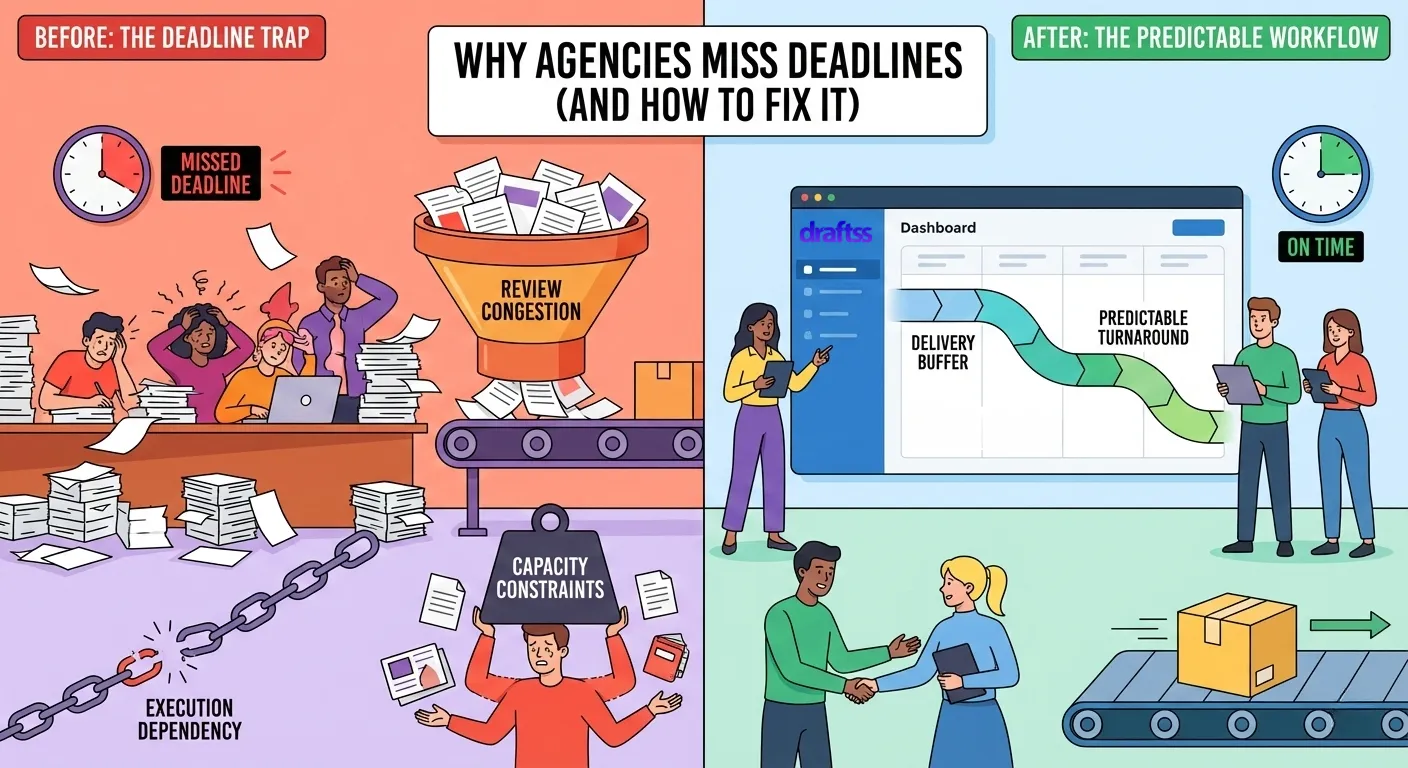

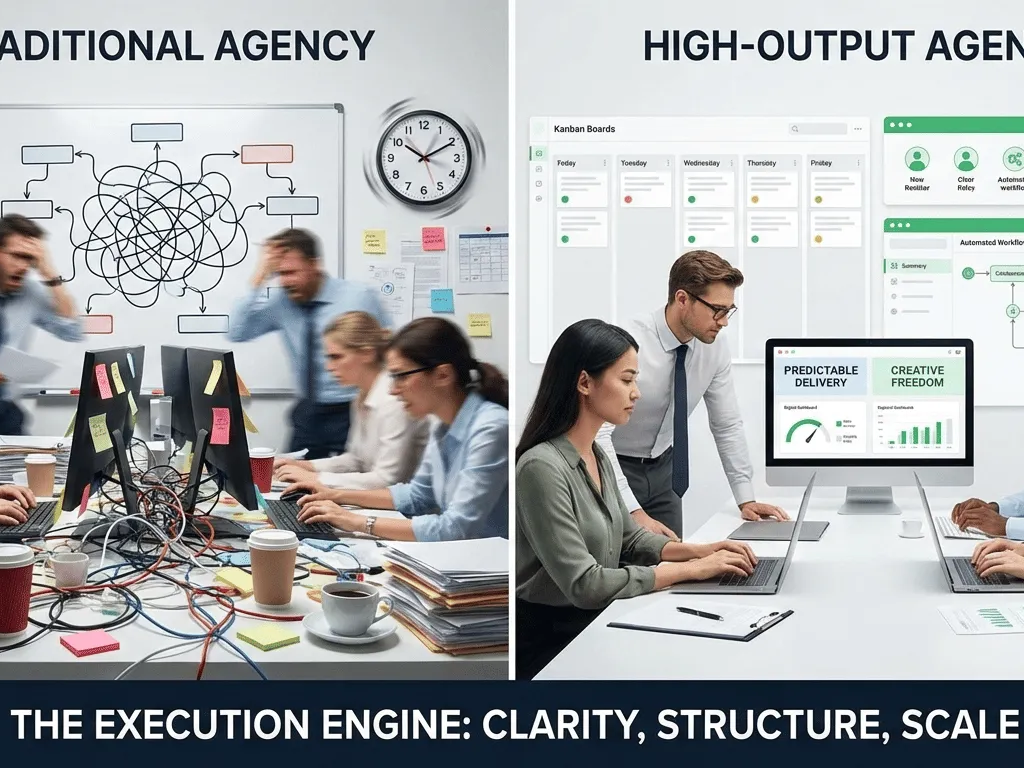
High-output agencies stand out by implementing structured operational strategies that boost efficiency and clarity. They establish execution layers that streamline every aspect of their workflows, from project scoping to reporting. Role clarity is essential here too; clearly defined responsibilities prevent overlap and enhance accountability across teams.
These agencies prioritize predictable delivery with standardized processes for projects, allowing them to avoid bottlenecks and missed deadlines. They also protect creativity by ensuring that creative leads can do their best work without getting bogged down in administrative tasks. Companies like Draftss illustrate these principles perfectly, showcasing an innovative execution model focused on high delivery capacity while maintaining quality output.
Table of Contents
- Understanding Execution Layers in High-Output Agencies
- Importance of Role Clarity for Effective Teams
- Achieving Predictable Delivery Through Standardized Processes
- Protecting Creative Leads: A Key Strategy
- Draftss as a Model for High-Output Execution
- Analyzing Patterns of High-Output Agencies
- Frequently Asked Questions
Understanding Execution Layers in High-Output Agencies
High-output agencies thrive on a solid operational architecture that shapes how work gets done. This structure involves four critical layers: cadence, data model, accountability, and tooling. Cadence sets the heartbeat of the agency, with daily stand-ups and monthly margin reports keeping everyone in sync. The data model tracks essential inputs like hours logged and outputs such as milestone progress, allowing teams to measure performance effectively.
Accountability is key, each team member knows their responsibilities, ensuring that tasks are owned and tracked efficiently. This clarity fosters a culture of responsibility, where everyone is aware of their role in the bigger picture. Finally, tooling is about selecting the right software that complements these layers, not the other way around. The right tools enhance communication and collaboration, reducing misunderstandings and streamlining processes.
To maintain peak efficiency, high-output agencies regularly review their operational processes, tweaking them based on team feedback and performance metrics. This commitment to continuous improvement helps them adapt quickly in a fast-paced environment, ensuring they stay ahead of the curve.
| Layer | Description | Purpose |
|---|---|---|
| Cadence | Establishes the rhythm of operations including daily stand-ups, weekly project reviews, monthly margin reports, and quarterly capacity forecasts. | Ensures consistent communication and accountability. |
| Data Model | Tracks various inputs like hours logged and outputs such as milestone velocity and budget burn. | Measures performance and project health. |
| Accountability | Defines ownership of tasks and responsibilities, with clear roles for project leads and ops leads. | Enhances responsibility among team members. |
| Tooling | Involves selecting and implementing appropriate software tools aligned with operational layers. | Maximizes efficiency and effectiveness of team workflows. |
Importance of Role Clarity for Effective Teams

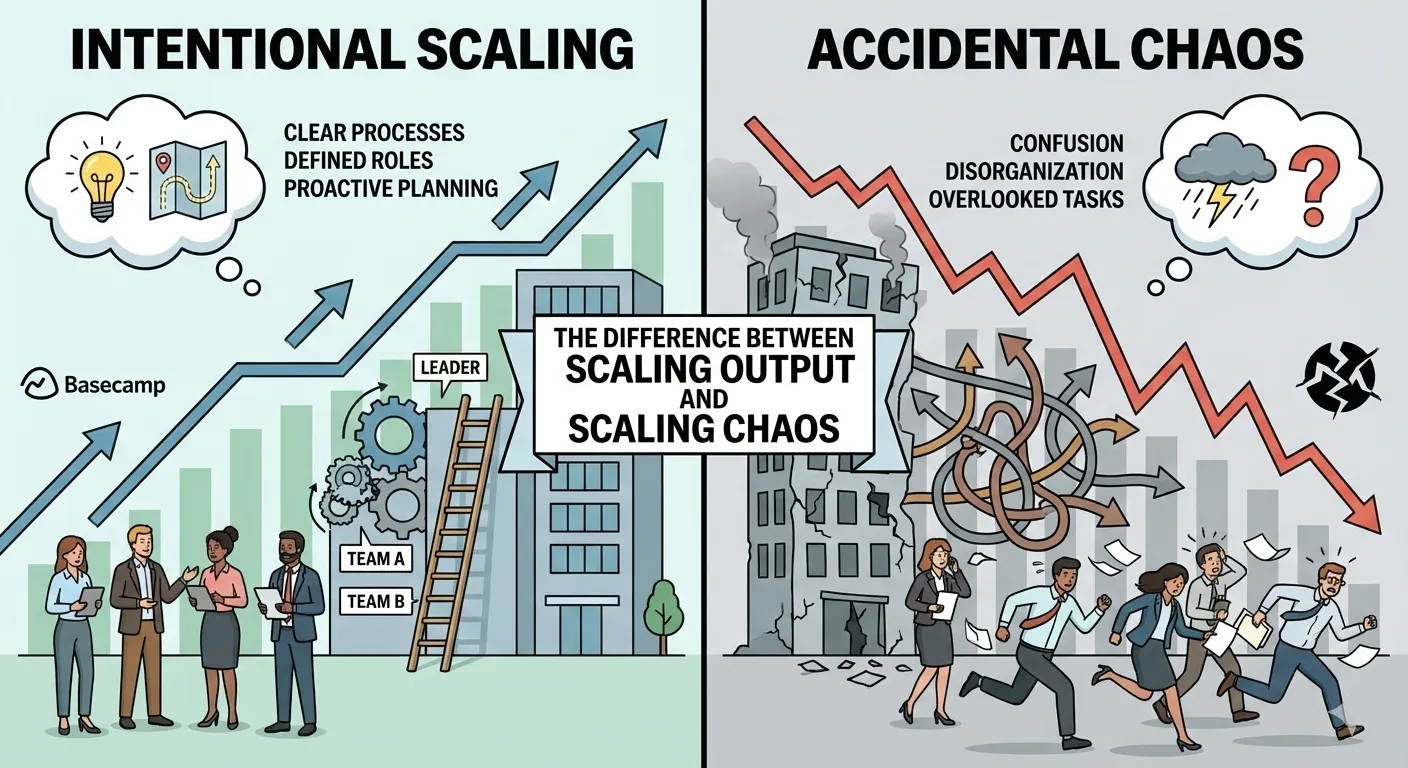
High-output agencies understand that defined roles are essential for success. By clearly outlining responsibilities, they eliminate confusion, allowing team members to know exactly what is expected of them. This clarity not only aligns individual goals with the agency’s objectives but also boosts morale and productivity. Leadership layers are another critical component, enabling team leads to make decisions independently, which reduces bottlenecks and speeds up the workflow.
Moreover, when expectations for each role are clear, the chances of task overlap diminish significantly. This streamlining of project flow leads to a more efficient work environment. Role clarity also simplifies performance evaluations, making it easier to assess individual contributions and identify areas for improvement.
Agencies can further enhance team effectiveness by creating tailored training programs based on well-defined roles, ensuring that team members develop the skills necessary for their specific positions. Regularly reassessing roles allows agencies to adapt to changing project needs and team dynamics, keeping them agile in a fast-paced environment.
Additionally, documenting roles and responsibilities provides a reliable reference point for both current and new team members, facilitating smoother onboarding processes. Ultimately, when team members feel secure in their roles, it fosters a culture of trust and enhances overall job satisfaction, creating a thriving agency environment.
- Defined roles eliminate confusion, allowing team members to understand their specific responsibilities.
- Role clarity helps in aligning individual goals with overall agency objectives, boosting morale and productivity.
- Leadership layers enable effective decision-making, empowering team leads to act without constant oversight.
- Clear expectations for each role reduce the likelihood of task overlap, streamlining project flow.
- Role clarity also aids in performance evaluations, making it easier to assess individual contributions.
- Agencies can create tailored training programs based on well-defined roles to enhance skill development.
- Regular role reassessment can adapt to changing project needs and team dynamics.
- Documentation of roles and responsibilities serves as a reference point for current and new team members.
- Fostering a culture where team members feel secure in their roles can enhance overall job satisfaction.
Achieving Predictable Delivery Through Standardized Processes
Standardized processes are the backbone of high-output agencies, enabling them to deliver projects consistently and reliably. By creating templates for typical projects, agencies can streamline execution, saving time and minimizing the chances of errors. Automation of repetitive tasks is another game changer, allowing team members to focus on the more creative and complex aspects of their work. Clear deadlines for each project phase foster accountability, ensuring that everyone is aligned and committed to timely delivery. Regular reviews of workflows help teams identify areas for improvement, making it easier to adapt and enhance efficiency over time.
Agencies also set key performance indicators to measure how effective their processes are, ensuring they stay on track. Feedback loops are crucial; they allow teams to apply lessons learned from past projects, continuously refining their delivery methods. Utilizing project management tools helps visualize progress, making it easier to spot potential bottlenecks before they become issues. Additionally, capacity forecasting is essential for managing resources effectively, preventing team overload during peak periods. This structured approach not only enhances predictability but also creates an environment where creativity can thrive.
Protecting Creative Leads: A Key Strategy
High-output agencies know the secret to unleashing creativity: they protect their creative leads. By creating environments where these leads can focus on their core tasks, agencies minimize distractions that can stifle innovation. Imagine a space where administrative burdens are lifted, allowing creative minds to thrive. Regular check-ins from operational leads provide support without veering into micro-management, guiding teams while respecting their creative flow. This collaboration fosters a culture of shared understanding, where creative and operational teams respect each other’s strengths.
Training programs designed to enhance project management and operational skills empower creative leads, transforming them into versatile contributors. In a culture of continuous improvement, constructive feedback helps these leaders grow, ensuring they evolve alongside the agency’s goals. Agencies also encourage creative leads to voice their insights on process improvements, igniting a sense of ownership that fuels motivation.
Flexibility in project scopes gives creative leads the freedom to explore bold ideas without the constraints of rigid guidelines. When they succeed, agencies celebrate these creative achievements, boosting morale and inspiring risk-taking. This protective approach not only nurtures creativity but also drives the entire agency toward innovative heights.
Execution at Scale Without Team Bloat
Draftss illustrates how agencies can scale execution without relying on constant team expansion. Rather than increasing headcount to meet growing demand, the focus is placed on structuring work in a way that supports speed, repeatability, and predictable output. Processes are designed to handle volume efficiently, allowing teams to sustain delivery without sacrificing consistency.
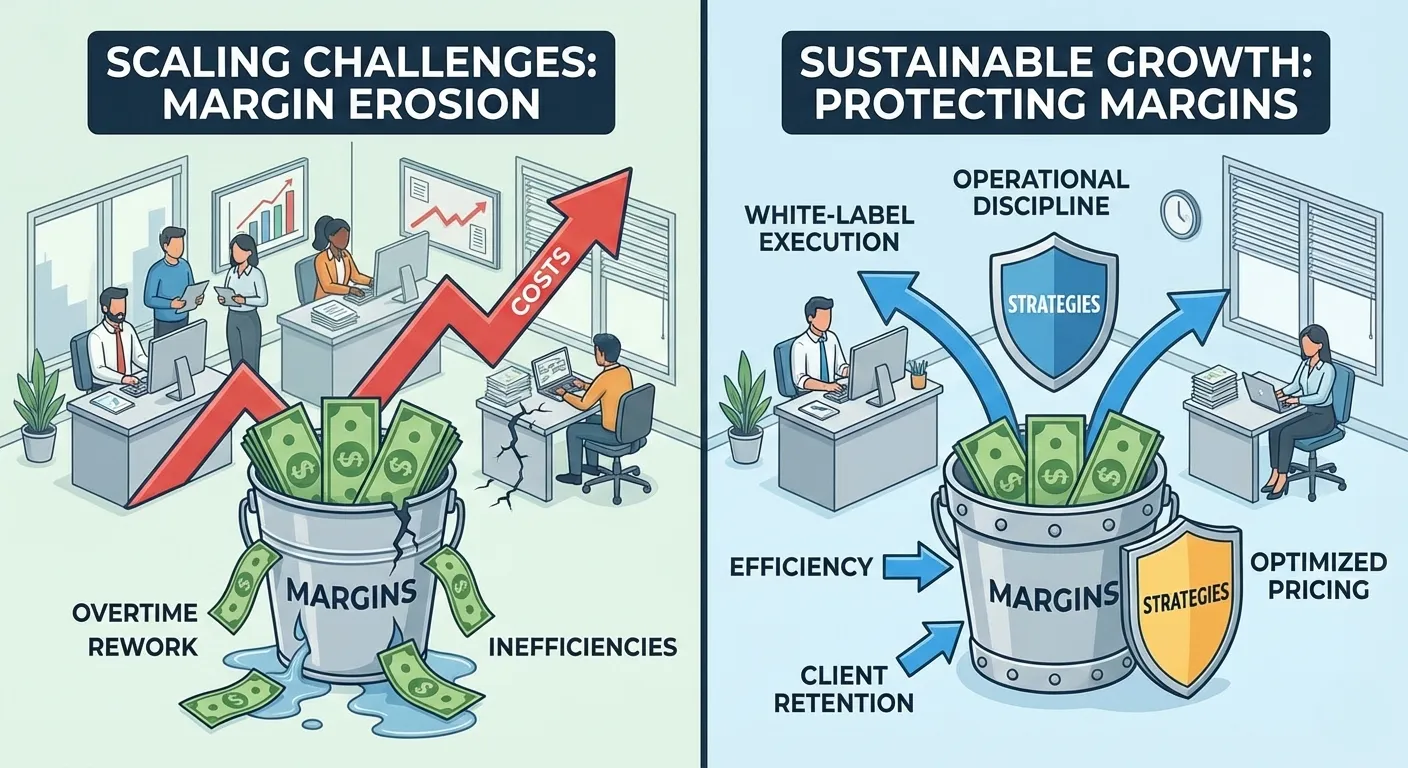
A key element of this approach is the use of white-label partnerships to absorb fluctuations in workload. This enables the agency to respond to short-term demand increases without permanently expanding internal teams. Clear project management systems support this model by providing visibility into task ownership, progress, and capacity, making it easier to coordinate work across both internal and external contributors.
Operational flexibility further supports scale. The ability to adapt quickly to shifting project requirements helps avoid bottlenecks, particularly in fast-moving environments. Selective automation reduces time spent on repetitive tasks, improving accuracy while freeing teams to focus on higher-value work. Ongoing training ensures team members can operate effectively within these systems, reducing dependence on improvised solutions as volume increases.
Client feedback is integrated directly into delivery workflows, tightening feedback loops and limiting downstream revisions. Together, these practices demonstrate how agencies can increase output through operational discipline and system design, rather than by continually adding people. In this sense, Draftss functions less as a growth story and more as an example of execution optimized for scale.
Analyzing Patterns of High-Output Agencies
High-output agencies often display fascinating patterns in their operational strategies, which can be a treasure trove for those seeking best practices. For instance, they typically use a mix of innovative tools and technologies that streamline processes, providing insights on how resources can be effectively allocated. The structure of their teams is another area of interest; responsibilities are clearly defined, allowing for optimal performance and minimizing overlaps.
Moreover, these agencies frequently review their operational cadence, ensuring that they adjust processes regularly to maintain efficiency and effectiveness. They rely on data analysis to track success and measure performance, which sets them apart from traditional agencies. By examining client engagement practices, we see how these agencies cultivate successful partnerships, prioritizing communication and collaboration.
The impact of company culture cannot be overlooked either; it plays a crucial role in shaping performance and encouraging a high-output environment. Recognizing these patterns and lessons learned can provide valuable insights to improve operational strategies for agencies of all types, fostering a culture of excellence and adaptability.
Frequently Asked Questions
What strategies help high-output agencies achieve more in less time?
High-output agencies often use effective project management tools, streamline their processes, and prioritize tasks to boost productivity and efficiency.
How do high-output agencies build strong team dynamics?
They focus on clear communication, foster collaboration among team members, and encourage a positive work culture that motivates everyone to work together.
What role does client feedback play in high-output agencies?
High-output agencies actively seek client feedback to refine their services, making adjustments based on insights to better meet client needs and improve outcomes.
How do high-output agencies stay updated with industry trends?
They invest time in research, attend workshops or conferences, and engage with industry networks to keep up with the latest trends and innovations.
What is the importance of continual learning for staff in high-output agencies?
Continual learning ensures staff remain skilled and knowledgeable, which enhances the agency’s overall performance and ability to adapt to new challenges.
TL;DR High-output agencies do not rely on hustle. They rely on design, but in how work flows, not just what gets created.
They build structured execution layers that define cadence, accountability, and performance visibility. Clear role ownership prevents overlap, standardized processes make delivery predictable, and capacity planning keeps teams from operating in constant recovery mode.
Creativity is protected, not squeezed. Operational systems absorb coordination, reporting, and workflow friction so creative leads can focus on high-value work instead of administrative drag.
Instead of scaling by adding more people, these agencies scale through system design. Models like Draftss show how structured workflows and white-label execution support can increase delivery capacity without creating organizational bloat.
The difference is not talent alone. It is operational architecture. High-output agencies win because their systems carry the weight, allowing their teams to focus on output, not overhead.