
Agencies often find themselves in a curious situation where revenue rises but profit margins shrink. This phenomenon arises from various factors that include rising operational costs and inefficient processes. Even with a revenue boost of up to 25%, profit margins can plummet, sometimes dropping from 20% to just 8%. As agencies take on more clients, project management becomes increasingly complex, leading to longer approval cycles and costly rework due to scope creep.
Additionally, rapid hiring without structure can dilute service quality while high employee turnover drives costs higher. By focusing on value-based pricing and improving operational efficiency through automation, agencies can strategically stabilize their margins for sustainable growth.
Table of Contents
- Understanding the Revenue and Profit Paradox
- Operational Inefficiencies Affecting Margins
- Staffing Challenges and Their Impact
- The Role of Scope Creep in Profit Loss
- Strategies for Predictable Execution
- Effective Utilization Management Techniques
- Benefits of White-Label Services
- Frequently Asked Questions
Understanding the Revenue and Profit Paradox

Many agencies find themselves in a puzzling situation: revenue is climbing, yet profit margins are slipping. This paradox can be attributed to various factors that often go unnoticed amidst the excitement of growth. Hidden costs become more pronounced as agencies scale their operations, leading to unanticipated expenses that eat away at profits. For instance, as an agency takes on more clients, the complexity of managing projects can escalate, resulting in longer approval cycles and more rounds of revisions, each adding to operational costs. Increased competition in the market can trigger price wars, forcing agencies to lower their fees, which directly impacts profit per client.
Moreover, the costs associated with acquiring new clients may rise, sometimes outpacing the revenue growth from existing clients. This is especially concerning when high client expectations demand more resources and time, pushing service delivery costs further up. Additionally, the ever-present risk of client churn can lead to lost revenue and increased costs in acquiring replacements. Lastly, fluctuations in seasonal demand can introduce instability, making it challenging to maintain consistent revenue streams. The catch-22 here is that the desire for rapid growth often tips the balance away from sustainable practices, focusing on short-term gains instead of long-term stability.
Operational Inefficiencies Affecting Margins

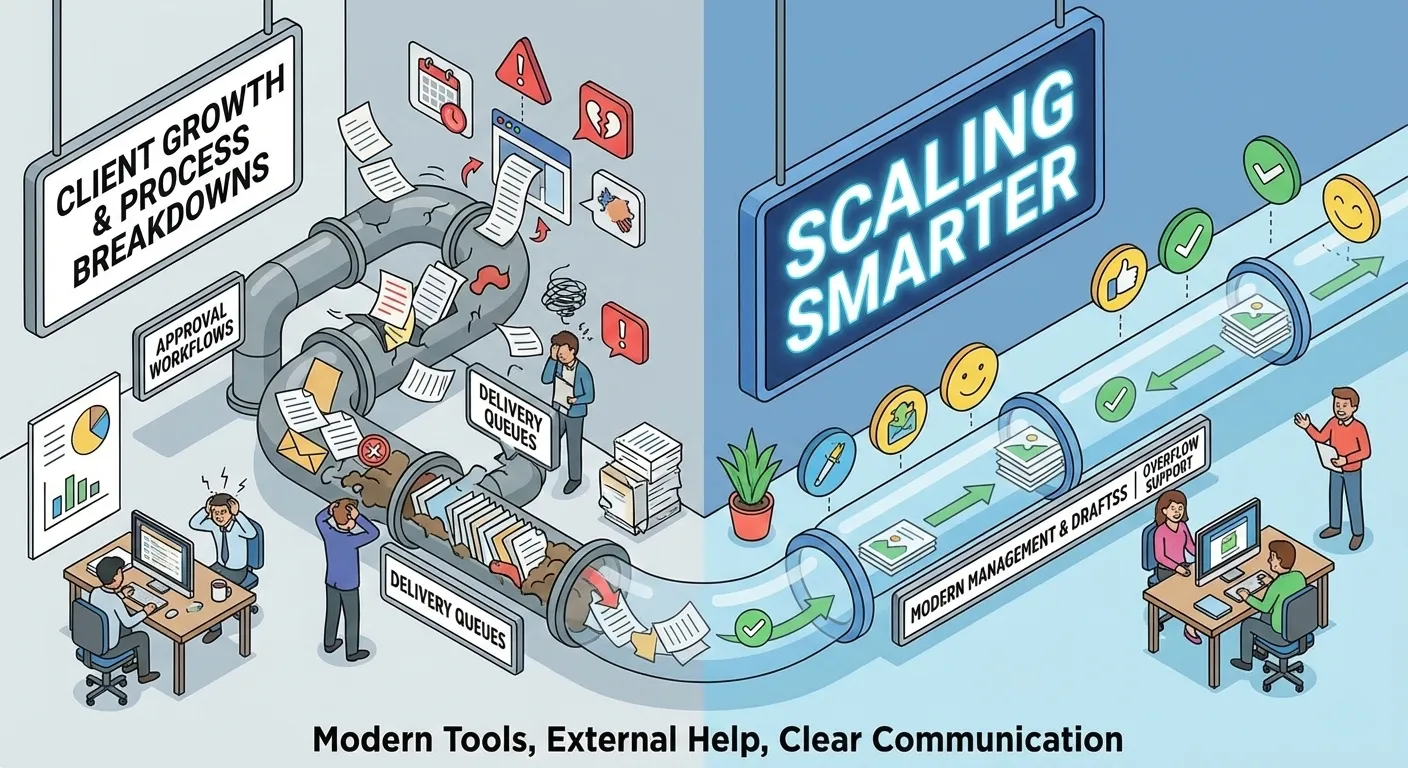
Operational inefficiencies can quietly erode profit margins, even as revenue climbs. Complex project management often leads to time overruns, resulting in increased costs. For instance, when an agency expands its client base, the growing complexity can create longer approval cycles and more rounds of revisions. This not only inflates project budgets but also strains resources. Poor communication among teams can further exacerbate these issues, leading to redundancies and delays. When teams are not aligned, tasks may be duplicated, and critical information can get lost in the shuffle.
Furthermore, inadequate technology can significantly hinder efficiency. Agencies that rely on outdated systems or fail to automate tasks often find their teams bogged down by manual work, which slows down operations and increases the likelihood of errors. A lack of standard operating procedures can lead to inconsistent service delivery, leaving clients dissatisfied and causing them to question the agency’s reliability.
Additionally, delayed feedback loops can create costly revisions and rework. When client feedback is not promptly addressed, teams may invest time into projects that require substantial changes later on. This not only impacts timelines but also stresses the budget. There is also a risk of a disconnect between what sales promises and what the delivery team can realistically achieve. This misalignment can harm client satisfaction, leading to churn and further financial strain.
Moreover, the underutilization of technology can prevent agencies from optimizing resources. When tools and software are not fully leveraged, opportunities for efficiency and improvement are missed. Inadequate training exacerbates this issue, as employees may make mistakes that could have been easily avoided, leading to further inefficiencies. Lastly, the failure to leverage analytics means that agencies miss out on critical insights that could guide them toward better practices and operational improvements.
- Complex project management can lead to time overruns, increasing costs.
- Poor communication among teams can create redundancies and delays.
- Inadequate technology can hinder efficiency and increase manual work.
- Lack of standard operating procedures can lead to inconsistent service delivery.
- Over-reliance on manual processes can slow down operations.
- Delayed feedback loops can cause costly revisions and rework.
- A disconnect between sales promises and delivery capabilities can harm client satisfaction.
- Underutilization of technology can prevent agencies from optimizing resources.
- Inadequate training can lead to employee mistakes and inefficiencies.
- Failure to leverage analytics can result in missed opportunities for improvement.
Staffing Challenges and Their Impact

Staffing challenges can significantly affect agency margins, especially when growth happens too quickly. Rapid hiring often leads to cultural misalignment within teams, creating friction that can stifle collaboration. For instance, if new hires are brought on board without a robust onboarding process, they may feel unprepared and disconnected, leading to lower overall productivity. Additionally, high turnover rates are common in the agency world, disrupting project continuity and eroding client relationships that took time to build. When staff experience burnout due to increased workloads, their creativity and efficiency can suffer, resulting in mistakes that not only affect project outcomes but also client satisfaction.
Furthermore, when agencies fail to provide clear career development options, employees may become dissatisfied, increasing the likelihood of turnover. Inconsistent performance evaluations can create confusion about expectations, leading to further frustration among team members. Often, agencies hire for immediate needs without considering the long-term fit and potential of candidates, which can compromise team cohesion and trust. Frequent staffing changes can lead to a chaotic environment, where the focus shifts from delivering quality work to merely keeping up. This increased workload can not only result in errors but also inflate overhead costs if hiring lacks a clear strategy. All these factors combined can create a perfect storm, where margins shrink even as revenue climbs.
The Role of Scope Creep in Profit Loss
Scope creep is a sneaky culprit that can significantly impact agency profit margins, often without anyone realizing it. When project parameters are not clearly defined, it opens the door to uncontrolled changes that can lead to budget overruns. As client expectations evolve, demands can shift beyond the initial agreements, making it difficult for agencies to manage costs effectively. If changes are not documented properly, disputes can arise over deliverables, further complicating project execution.
Failure to address scope changes in contracts can mean lost revenue opportunities, as agencies may end up working extra hours or resources without corresponding compensation. Inadequate communication can lead to misunderstandings about what is included in the project scope, which is particularly common in complex projects. These complexities make it all the more essential to have strict management practices in place.
Regular project reviews can help identify and manage scope changes proactively, allowing agencies to stay ahead of potential issues. Educating clients about what constitutes scope can also create a more collaborative project environment, leading to better outcomes. When agencies negotiate scope changes upfront, they can protect their profit margins and ensure that growth translates into real profitability.
Strategies for Predictable Execution
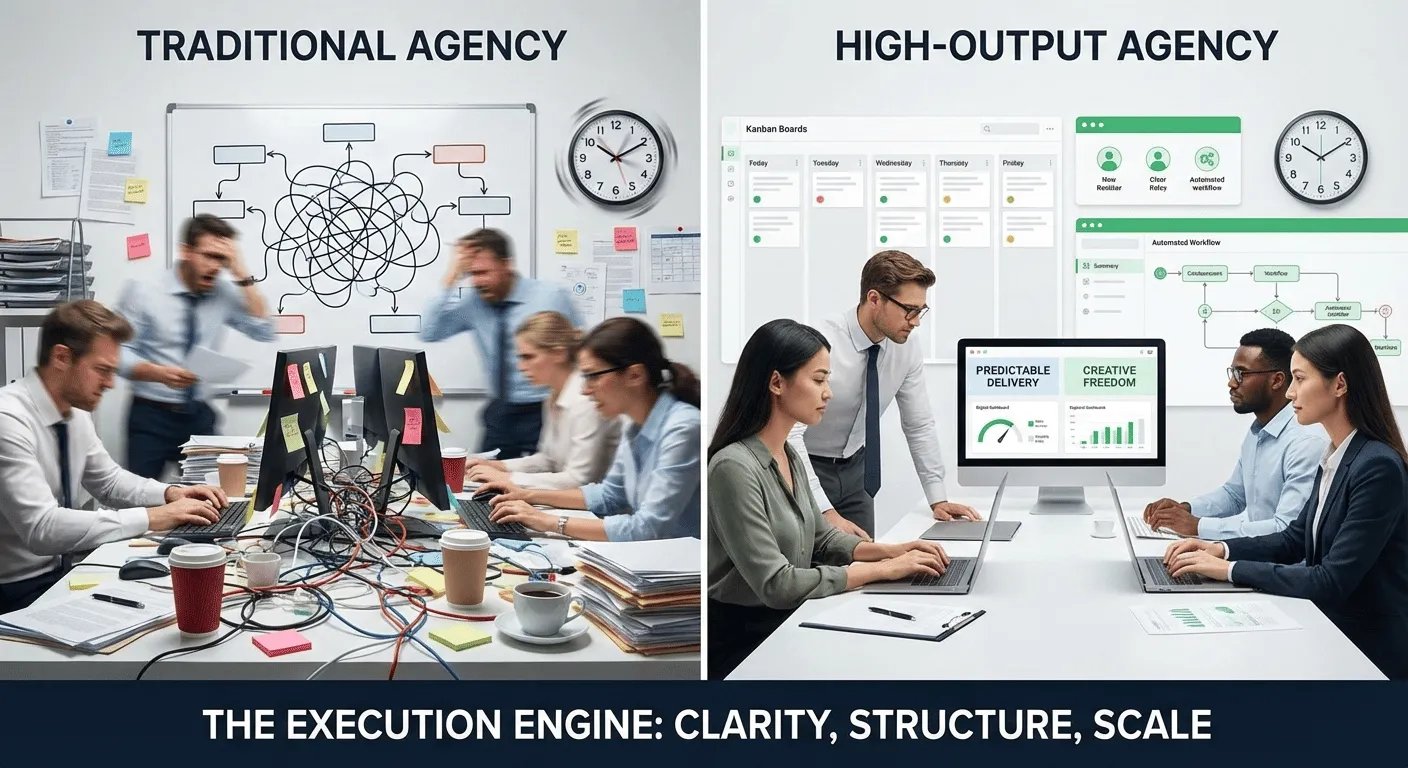
Implementing project management tools is essential for streamlining workflows. These tools can help teams track progress, assign tasks, and manage deadlines more efficiently, reducing the chances of miscommunication and delays. By setting clear project milestones, agencies can improve accountability and focus, ensuring that everyone is aligned and aware of their responsibilities. Regular check-ins are crucial too, as they allow teams to assess whether projects are staying on track and within budget.
Creating standardized templates can significantly cut down on time spent on repetitive tasks. This not only boosts productivity but also enhances consistency in service delivery. Utilizing feedback loops can elevate client satisfaction; by gathering feedback early and often, agencies can adjust their approach and reduce the need for extensive revisions later on.
Training teams on best practices is another way to enhance efficiency and quality. When team members are well-versed in the latest techniques and tools, they can operate more effectively, leading to better outcomes. Encouraging collaboration fosters innovation, allowing teams to brainstorm and develop creative solutions that meet client needs.
Incorporating client feedback early can minimize revisions and rework, saving both time and resources. Additionally, developing a clear pricing strategy helps agencies enhance revenue predictability. By articulating value through case studies, agencies can illustrate the benefits of their services, making it easier to justify their pricing and build stronger client relationships.
Effective Utilization Management Techniques
Effective utilization management is key to maintaining healthy margins, even in a growing agency. By harnessing data analytics, agencies can craft strategic resource allocation plans that maximize output while minimizing waste. For instance, analyzing past project data can help forecast demand, preventing scenarios of overstaffing or understaffing. Setting utilization targets acts as a compass for measuring productivity, ensuring teams are working efficiently towards defined goals.
Encouraging cross-training among team members not only enhances flexibility but also improves resource utilization. When employees can easily switch roles, it leads to a more agile environment capable of adapting to changing workloads. Additionally, implementing flexible work arrangements can boost employee satisfaction, which often translates to higher productivity and retention rates. Regular performance reviews are essential for recognizing top performers and pinpointing areas that need improvement, fostering a culture of continuous growth.
Aligning individual goals with agency objectives keeps everyone focused and motivated, driving performance in the right direction. Incentives tied to high utilization rates create a competitive spirit that can inspire teams to produce their best work. Using team retrospectives allows for shared insights and lessons learned, paving the way for ongoing improvements in processes. Lastly, monitoring industry trends helps agencies anticipate changes in resource needs, enabling proactive adjustments that safeguard profit margins.
Benefits of White-Label Services
White-label services offer agencies a fantastic opportunity to expand their service offerings without the burden of additional overhead. By partnering with established providers, agencies can quickly scale their operations without the need to hire more staff. This not only allows for a rapid response to client demands but also helps improve turnaround times, ensuring that clients receive their solutions faster and more efficiently. Moreover, outsourcing non-core tasks through white-label solutions enables agencies to concentrate on what they do best, enhancing their overall performance.
Agencies can also boost their profitability by providing a wider range of services without the hefty upfront investment typically associated with developing new capabilities in-house. For instance, a marketing agency could offer advanced data analytics services through a white-label partner, tapping into specialized skills that may not exist within their current team. This strategic approach not only enhances brand credibility but also reduces the risks typically associated with launching new services.
Furthermore, by offering clients a one-stop solution, agencies can significantly improve client satisfaction. Clients appreciate the convenience of having all their needs met under one roof, which fosters loyalty and long-term relationships. These strategic partnerships often lead to more collaborative efforts and growth opportunities, propelling agencies toward sustained success in a competitive landscape.
Frequently Asked Questions
What causes agency margins to shrink despite increasing revenue?
As agencies grow their revenue, they might spend more on staff, technology, or marketing, which can eat into their profits. Even with higher earnings, if expenses rise faster, margins can still shrink.
How do operational costs impact agency profits?
Agencies often face rising operational costs like salaries, rent, and software subscriptions. If these costs increase more than revenue, it can lead to shrinking margins even when sales look good.
Can client demands affect profit margins for agencies?
Absolutely. As clients request more services or faster turnarounds, agencies may need to hire more staff or pay for overtime, which can drive up costs and lower profit margins.
Why is balancing quality and cost important for agencies?
When agencies focus too much on cutting costs to boost margins, they might sacrifice quality. This can lead to losing clients in the long run, hurting overall profitability. It’s all about finding that perfect balance.
What role does competition play in agency margin challenges?
Higher competition can force agencies to lower prices to stay attractive, which may increase sales but potentially lead to thinner margins, especially if costs remain the same or increase.
TL;DR Revenue growth does not guarantee healthier margins. In agencies, growth often multiplies complexity faster than pricing power.
As client volume rises, operational friction increases. Longer approval cycles, rework from scope creep, rushed hiring, and inefficient processes quietly inflate delivery costs. More projects mean more coordination, more revisions, and more management overhead. Without structure, cost per project rises even as top-line revenue improves.
The core issue is not sales. It is execution economics. Agencies that stabilize margins focus on predictable delivery, clear scope control, better utilization management, and operational efficiency through automation and structured workflows.
Flexible execution models, including white-label support, can further protect margins by expanding capacity without permanently increasing fixed payroll. When cost structure becomes controlled and delivery becomes repeatable, growth translates into profit instead of pressure.
Sustainable agencies do not just grow revenue. They design operations that allow profit to scale with it.