

Gitlab
See pricing for GitLab’s DevOps Platform, which combines the ability to develop, secure, and operate software in a single application.
Gitlab Pricing Page Design
$50 - $149 3 Plans
Launch Website
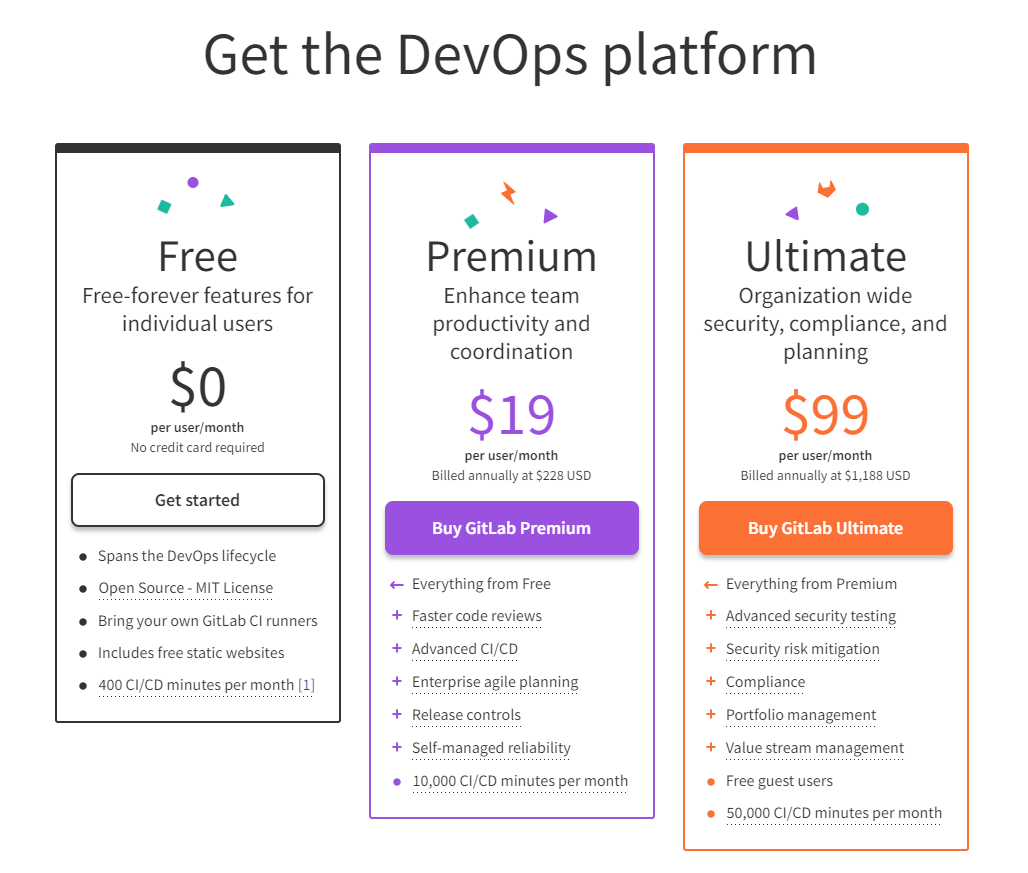
The Gitlab pricing section is well-designed and effective:
1. Clear Hierarchy and Visual Appeal:
- Headline Focus: “Get the DevOps platform” immediately communicates the core offering.
- Three-Tier Structure: The clear division into “Free,” “Premium,” and “Ultimate” makes it easy to compare options.
- Color Coding: Distinct colors differentiate each tier, making them visually distinct and memorable.
- Concise Information: Each tier highlights the key benefits and features, avoiding overwhelming users with too much detail.
- Call to Action Buttons: Prominent “Get started,” “Buy GitLab Premium,” and “Buy GitLab Ultimate” buttons guide users towards conversion.
2. Value-Based Differentiation:
- Focus on Benefits: The descriptions emphasize the value proposition of each tier, like “Free-forever features,” “Enhance team productivity,” and “Organization-wide security.”
- Feature Comparison: The checkmarks and “+ ” symbols clearly indicate the added features in each tier, facilitating comparison.
- Progressive Value: The features are structured to show a clear progression of value as you move from Free to Ultimate, justifying the price difference.
3. Transparent Pricing:
- Clearly Stated Prices: The price per user/month is prominently displayed for each tier.
- Annual Billing Option: Presenting the annual cost highlights potential savings and provides transparency.
- Free Tier Emphasis: The “Free” tier with “No credit card required” lowers the barrier to entry and encourages trial.
4. Addressing Different User Needs:
- Individual Users: The Free tier caters to individuals exploring the platform.
- Growing Teams: The Premium tier focuses on team collaboration and productivity.
- Large Organizations: The Ultimate tier addresses the needs of enterprises with advanced security, compliance, and management requirements.
5. Strategic Use of Limitations and Social Proof:
- CI/CD Minutes: Specifying the number of CI/CD minutes provides a tangible measure of usage and potential upgrade trigger.
- “Everything from…” Statements: Reinforces the cumulative value of each tier, showing that you get everything from the previous tier plus more.